Skip to content

How to Choose the Best Leather Chairs in 2026?

Choosing Leather Chairs in 2026 means weighing comfort, construction, care, and cost—not just color. Grand View Research’s Leather Furniture Market report tracks continued demand alongside changing consumer preferences and furniture retail trends. That context matters, but a growing market does not guarantee a better chair. Your own room, routine, and budget still decide whether a purchase works.

Look closely at the details. Does the seat support your lower back during a long dinner? Do the seams sit evenly beneath your fingertips? Is the leather type clearly identified, and does the frame feel steady when you shift your weight? These practical checks reveal more than a polished product photo. The report offers useful market context, yet it cannot tell you how a particular chair will age in a sunny room or beside a busy kitchen table.

Danish furniture designer Hans J. Wegner is often credited with saying, “A chair is only finished when someone sits in it.” That is a helpful test for Leather Chairs: sit, adjust, and notice where pressure builds. A soft showroom seat may feel inviting for five minutes, then sag through a long evening. And honestly, labels can still be confusing. This guide will help you compare leather grades, upholstery methods, ergonomics, durability, and maintenance before choosing. Expect trade-offs, not a perfect chair. The best option is the one that suits your space and remains comfortable in everyday use.
How to Choose the Best Leather Chairs in 2026?

Understand Leather Chair Types and Their Uses

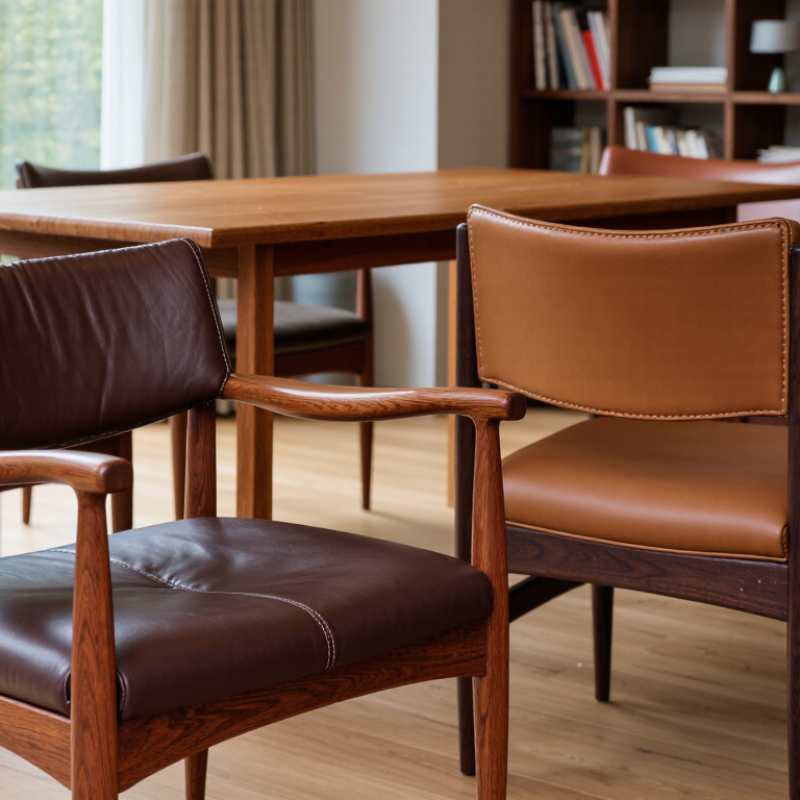
Leather chairs differ by both hide and design. Full-grain leather keeps natural marks and often develops a deeper patina with use. It can feel firm at first, so check the seat cushioning too. Top-grain leather has a more even surface and is often easier to maintain. Corrected-grain leather has a uniform finish, which may suit busy homes where small spills are likely. “Leather” can also describe bonded materials, so read the product details rather than relying on the label alone.

The chair’s shape matters just as much. A task chair needs adjustable support and a seat that stays comfortable through desk work. A dining chair is usually more upright, making it easier to sit down and stand up during meals. Lounge and club chairs have deeper seats and broader arms for relaxed reading, but they may take up more room than expected. Recliners need clear space behind or beneath them. Measure the room first.

Think about daily use, not just appearance. A pale leather chair can brighten a dim corner, though it may show marks sooner. Dark finishes can hide some wear, but dust still settles on them. Comfort is personal. Sit in the chair for several minutes, notice whether the front edge presses against your legs, and check if your feet rest flat. No material is maintenance-free; even a well-made chair needs occasional care.

Compare Leather Grades, Finishes, and Upholstery Options

Leather grades describe the hide, but labels are not perfectly consistent across sellers. Full-grain leather keeps the natural surface, including small marks; top-grain leather is usually sanded or corrected for a more uniform look. Split leather comes from lower hide layers and often receives a coating or embossed texture. Check the product specification, not just the grade name. Look closely at the seat, where a smooth finish can hide wear until it appears.

Finishes change both appearance and upkeep. Aniline leather feels soft and shows natural variation, but spills and sunlight can leave visible marks. Pigmented leather has a protective surface layer and is usually easier to wipe clean, though it may feel less supple. A useful showroom check: press a cushion, inspect seams, and ask how the finish should be cleaned. Details matter.

If you are comparing leather with fabric, use performance figures carefully. The Association for Contract Textiles’ Upholstery Fabric Performance Guidelines set 30,000 double rubs as a high-traffic benchmark for woven fabrics. That figure does not predict leather life; test methods and materials differ. I would not choose a chair by one number alone. Consider pets, direct sunlight, and the daily habit of sitting in the same spot. Some wear is inevitable.

Assess Comfort, Fit, and Construction Quality

How to Choose the Best Leather Chairs in 2026?

Assess Comfort, Fit, and Construction Quality

A chair can feel plush for five minutes and become tiring after an hour. Sit back with your feet flat and check whether the seat supports your thighs without pressing behind your knees. Your lower back should meet the backrest naturally, not strain to reach it. Try shifting position, too. A chair that only feels good when you sit perfectly still may not suit everyday use. Small details matter: firm, even cushions and armrests that let your shoulders relax. Comfort is personal, so bring your usual posture into the test.

Fit the chair to the room and the people using it. Measure doorways, walkways, and the space around a table before ordering. A broad chair can look inviting but block a narrow passage. Check the seat height against your desk or dining table, not just the product dimensions. Then inspect the construction. Look for straight, stable legs, tight joints, and stitching that stays even around corners. Ask what type of leather covers the chair and how it may change with use. Surface texture alone can be misleading. A careful inspection still cannot predict every creak or cushion change over time. That uncertainty is worth admitting. If possible, sit in the chair more than once and check the return terms before buying.

How to Choose the Best Leather Chairs in 2026? — Assess Comfort, Fit, and Construction Quality

Chair Type Typical Fit and Dimensions Comfort Check Leather to Consider Construction Checks Best Suited For
Dining chair Seat height is commonly about 17–19 in (43–48 cm). Check that the chair fits beneath the table with adequate clearance for legs and arms. Sit with feet flat and knees comfortably bent. A firm, supportive seat is usually more practical for meals than a deep, soft cushion. Protected or pigmented leather can be easier to clean in a busy dining area. Check the care instructions and whether the surface is coated. Look for stable legs, secure corner blocks or reinforced joints, even stitching, and a frame that does not rock under normal use. Dining rooms, breakfast areas, and occasional seating.
Adjustable office chair Choose a model with adjustable seat height and a seat depth that leaves a small gap between the seat edge and the back of the knees. Check lumbar support, recline control, armrest position, and whether your feet rest flat when the chair is adjusted to your desk. Top-grain or corrected-grain leather may have a more uniform, finished surface. Confirm whether upholstery panels are genuine leather throughout or combined with other materials. Test the adjustment controls, base stability, casters, tilt mechanism, and attachment points. Review the maker’s stated weight capacity and warranty. Desk work and regular seated use.
Lounge chair Often has a lower seat and a deeper seat than a dining chair. Compare the chair’s actual seat depth and height with your preferred sitting posture. Make sure the depth supports your back without pressing behind your knees. Try the chair with and without a footrest if one will be used. Full-grain leather retains more of the hide’s natural surface; its appearance can develop character with use. Natural marks and variation are normal. Check frame rigidity, secure arm connections, cushion support, and whether removable cushions keep their shape and stay in place. Reading corners, living rooms, and relaxed seating.
Recliner Measure the chair in both upright and fully reclined positions. Allow space behind and in front, as well as a clear path through the room. Test the footrest, head support, recline range, and ease of returning upright. The seat should support your lower back in more than one position. Protected leather finishes can simplify routine cleaning. Ask which surfaces are leather and which, if any, are synthetic upholstery. Operate the recline mechanism several times. Check for smooth movement, stable support, secure fasteners, and accessible maintenance information. Television rooms and extended relaxation.
Compact accent chair Compare overall width, seat width, and arm height with the available floor space. A compact exterior does not always mean a narrow or shallow seat. Check that the seat supports your thighs and that the arms do not force your shoulders upward. Corrected-grain leather has a more consistent appearance than leather with a pronounced natural grain. Review the finish and cleaning requirements. Inspect the frame, leg attachments, upholstery tension, and seams, especially at corners and other high-stress areas. Small living spaces, bedrooms, and occasional seating.
High-use family chair Prioritize a seat height and depth comfortable for the people who will use it most. Measure doorways and room access before ordering. Have more than one household member try the chair. Consider cushion firmness, arm support, and how easily the seat can be cleaned. Compare leather finish, protective treatment, and care instructions. Bonded or blended upholstery should not be assumed to have the same composition or wear characteristics as a full leather hide. Look for a clearly described frame, reinforced joints, durable cushion support, and written information on upholstery coverage and warranty exclusions. Shared living areas and frequent everyday use.

Measurement note: Dimensions shown are general fit guidance, not universal standards. Chair dimensions, leather finishes, and construction methods vary by manufacturer. Measure the space and compare the chair’s listed seat dimensions before buying.

Match Chair Style and Size to Your Space

When choosing leather chairs in 2026, start with your room’s footprint, not a showroom photo. Measure the chair’s full width and depth, including projecting arms. Leave roughly 30 inches for a main walkway where possible, and check that doors and drawers still open. Slim, straight arms suit tighter layouts; rolled arms need more breathing room. Dark leather can also look visually heavier beside pale walls and narrow-legged furniture.

The U.S. Census Bureau’s Characteristics of New Housing report puts the average floor area of new single-family homes in 2023 at 2,411 square feet. That figure is a broad benchmark, not a guide to your living room. The 2024 Houzz & Home Study reports a median U.S. renovation spend of $24,000 for 2023, a reminder that layout decisions sit within real household budgets. Before buying, tape the chair’s footprint on the floor and walk around it. Check sightlines to windows and screens, too. It’s easy to miss. These measurements are starting points, not rules; an open doorway can change the fit more than another few inches of floor space.

Compare Maintenance Needs, Warranties, and Overall Value in 2026

When comparing leather chairs in 2026, check the care instructions before judging the finish. Protected leather usually tolerates everyday spills better, while aniline leather shows natural markings and may need gentler care. Ask what cleaner the maker recommends; unsuitable products can dry or discolor the surface. Wipe dust with a soft cloth, and deal with spills promptly. Small habits matter.

Warranty language deserves a close read. Check whether coverage includes the leather, stitching, frame, and reclining parts, and note the term for each. Some warranties exclude fading, scratches, ordinary wear, or damage from unapproved cleaners. Read the exclusions. Keep your receipt and care records, since claims may require proof of purchase or maintenance. A long warranty is useful only when its limits fit how you actually use the chair.

Compare overall value over several years, not just the price tag. A chair used daily should have a sturdy frame, replaceable parts where available, and upholstery suited to your household. Ask about repair options and expected care costs. A lower-priced chair might be the better choice for a spare room; for a busy living room, stronger materials may justify spending more. I would still inspect the seams in person if possible. Photos can hide uneven stitching, and that is an easy detail to overlook.

How to Choose the Best Leather Chairs in 2026

Compare maintenance needs, durability potential, and overall value by leather type.

Scores are a qualitative buying guide, not lab measurements; actual performance depends on construction, use, and care. Protected leather is generally easier to clean, while aniline leather shows marks more readily. Warranty terms are seller-specific, so check coverage for leather wear, peeling, stains, and normal-use damage before buying.

Scroll To Top