
What Are the Top 10 Types of Office Chairs?
Choosing among the top 10 types of Office Chairs is not simply a matter of appearance. A chair may look executive, modern, or compact, yet feel uncomfortable after two focused hours. The Gensler Research Institute’s workplace studies consistently show that employees value choice, comfort, and settings that support different work activities. Steelcase research similarly reports strong demand for greater control over where and how people work. These findings matter because one chair cannot serve every body, desk, or working style.
This guide examines ergonomic chairs, task chairs, executive chairs, mesh chairs, kneeling chairs, saddle chairs, drafting chairs, conference chairs, gaming chairs, and guest chairs. Each type offers practical strengths. A mesh back can improve airflow beside a warm window. A drafting chair can support a raised workbench. A kneeling chair may change hip angles, but it will not suit every user. The U.S. Occupational Safety and Health Administration advises adjustable seating, proper back support, and feet resting securely on the floor or a footrest. BIFMA performance standards also provide useful benchmarks for durability and safety in commercial furniture.
Comfort is personal. Measure twice.
Seat height, lumbar support, armrest movement, and stable casters deserve close attention. The best choice depends on posture, working hours, floor surface, and available space. Some popular claims about “perfect posture” are too absolute. Real workplaces need movement, adjustment, and honest testing. Before buying, sit for several minutes, reach for the desk, and notice pressure beneath your thighs. A reliable chair should support your work quietly, not demand constant attention.
Office Chair Basics: Purpose, Structure, and Core Features
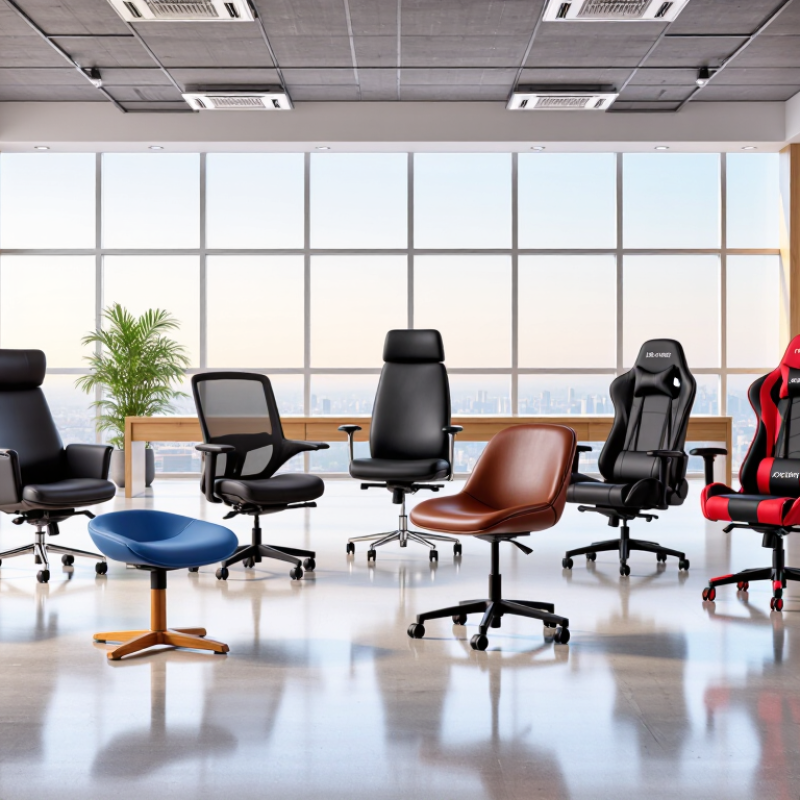
Office chairs serve different tasks, so their structure should match the user’s daily movements. The ten common types are task, ergonomic, executive, drafting, conference, guest, reception, kneeling, saddle, and stool chairs. Task chairs support general desk work with adjustable height, casters, and a rotating base. Ergonomic chairs add lumbar support, seat-depth adjustment, and flexible armrests. Executive chairs usually have wider cushions and taller backs, while conference chairs favor stable, upright seating.
Drafting chairs raise the seat for elevated desks and often include a foot ring. Guest and reception chairs provide simple, fixed support for shorter visits. Kneeling chairs shift some weight toward the shins. Saddle chairs encourage an open hip angle, although they may feel unfamiliar. Stools suit counters or active workstations. Purpose matters more than appearance.
A reliable chair has a strong five-point base, smooth casters, breathable contact surfaces, and controls that resist accidental movement. The backrest should support the lower back without forcing a rigid posture. Seat height should let both feet rest on the floor, with knees near hip level. Armrests should allow relaxed shoulders, not lifted ones. Try sitting for at least ten minutes. Small pressure points often appear later. No chair is perfect. Even careful advice can fail when body shape, desk height, or working habits differ. I have found that users often overvalue thick padding and undervalue easy adjustment. A chair that fits today may still need regular changes.
What Are the Top 10 Types of Office Chairs? - Office Chair Basics: Purpose, Structure, and Core Features
| No. | Office Chair Type | Primary Purpose | Typical Structure | Core Features | Common Adjustments | Best-Suited Environment |
|---|---|---|---|---|---|---|
| 1 | Task Chair | General desk work and short-to-medium work sessions | Compact seat, backrest, five-star base, and casters | Simple ergonomic support, rolling mobility, and space-efficient design | Seat height; sometimes tilt tension and backrest height | Shared workstations, home offices, and flexible offices |
| 2 | Ergonomic Chair | Long periods of computer-based work | Contoured seat, supportive backrest, adjustable armrests, and stable base | Lumbar support, breathable back, recline mechanism, and adjustable seat depth | Seat height, seat depth, armrests, lumbar support, recline, and tilt tension | Dedicated workstations and home offices with daily computer use |
| 3 | Executive Chair | Comfort, presence, and extended desk work | Tall backrest, wide seat, padded upholstery, and substantial five-star base | High back support, thick cushioning, padded armrests, and reclining capability | Seat height, recline angle, and tilt tension; other adjustments vary | Private offices and formal management spaces |
| 4 | Conference Chair | Meetings, discussions, and collaborative sessions | Medium-height backrest, fixed frame or sled base, and compact footprint | Upright posture, easy movement around tables, and coordinated appearance | Usually limited to swivel or basic seat movement | Meeting rooms, boardrooms, and collaborative areas |
| 5 | Drafting Chair | Work at elevated desks, counters, and drafting tables | Extended-height gas lift, foot ring, tall backrest, and five-star base | Greater seat height range, foot support, and mobility | Seat height, foot-ring position, and sometimes backrest or tilt | Design studios, laboratories, reception counters, and standing-height desks |
| 6 | Kneeling Chair | Alternative sitting posture and reduced hip flexion | Angled seat with a padded knee or shin support | Forward-tilted posture and weight distribution between the seat and lower legs | Limited; some models provide seat-angle or height adjustment | Short-duration computer work and posture variation, when comfortable for the user |
| 7 | Saddle Chair | Upright, open-hip sitting and frequent movement | Saddle-shaped seat, central support column, and wheeled base | Reduced seat pressure points, open thigh angle, and compact profile | Seat height and sometimes seat tilt | Healthcare, laboratories, studios, and active task areas |
| 8 | Active-Sitting Chair | Encouraging small, frequent changes in sitting position | Flexible base, moving seat pan, or balanced support mechanism | Multidirectional movement, dynamic balance, and reduced static posture | Seat height and movement resistance; features vary by design | Flexible offices and users who prefer frequent posture changes |
| 9 | Guest or Visitor Chair | Short visits, reception seating, and face-to-face conversations | Fixed legs or sled frame with a molded or upholstered seat and back | Durable construction, easy maintenance, and simple movement | Normally none; some models swivel or stack | Reception areas, waiting rooms, visitor spaces, and guest offices |
| 10 | 24-Hour or Intensive-Use Chair | Continuous or multi-shift workstation use | Reinforced frame, durable upholstery, adjustable support system, and heavy-duty base | High durability, extensive adjustability, breathable materials, and strong lumbar support | Seat height and depth, armrests, lumbar support, recline, and tilt tension | Control rooms, security desks, dispatch centers, and round-the-clock operations |
Related Posts
-
How to Choose Task Chairs for Your Office in 2026?
-
China Best Restaurant Chairs Manufacturers and Suppliers
-
Why Choose Outdoor Chairs for Your Home and Garden?
-
2026 Top Restaurant Booths Trends for Global Buyers?
-
Why Are Gaming Chairs Essential for Ultimate Comfort?
-
Top Stacking Chairs for Events and Offices?