Global buyers are entering a more demanding Outdoor Tables market in 2026. Grand View Research reports that the global outdoor furniture market was valued at approximately USD 19.4 billion in 2023. It also projects continued growth through 2030. The Freedonia Group identifies residential construction, hospitality investment, and replacement demand as major market drivers. These trends create opportunity, but they also increase purchasing risks.
The right table must survive real conditions. Think of strong sunlight, coastal salt, sudden rain, and uneven restaurant terraces. Aluminum can reduce weight and resist corrosion. Teak offers a warm appearance, but it requires responsible sourcing and regular care. Compact folding models may suit urban balconies. Heavier bases can improve stability in windy hotel courtyards. Buyers should check dimensions, packaging, spare parts, surface treatments, and maintenance instructions. A low factory price can hide higher freight, assembly, or replacement costs.
Outdoor furniture designer Richard Frinier has said, “Outdoor living is about creating a lifestyle, not simply furnishing a space.” His view remains useful for global sourcing decisions. Outdoor Tables should support comfort, traffic flow, brand identity, and long-term value. Suppliers must also provide traceable materials, consistent samples, credible test documentation, and clear warranty terms. No checklist is perfect. Local climate data can still expose weak assumptions. For example, a table tested in a dry climate may perform differently beside a humid seafront. This guide explains how buyers can compare designs, materials, certifications, logistics, and supplier reliability before placing a 2026 order.
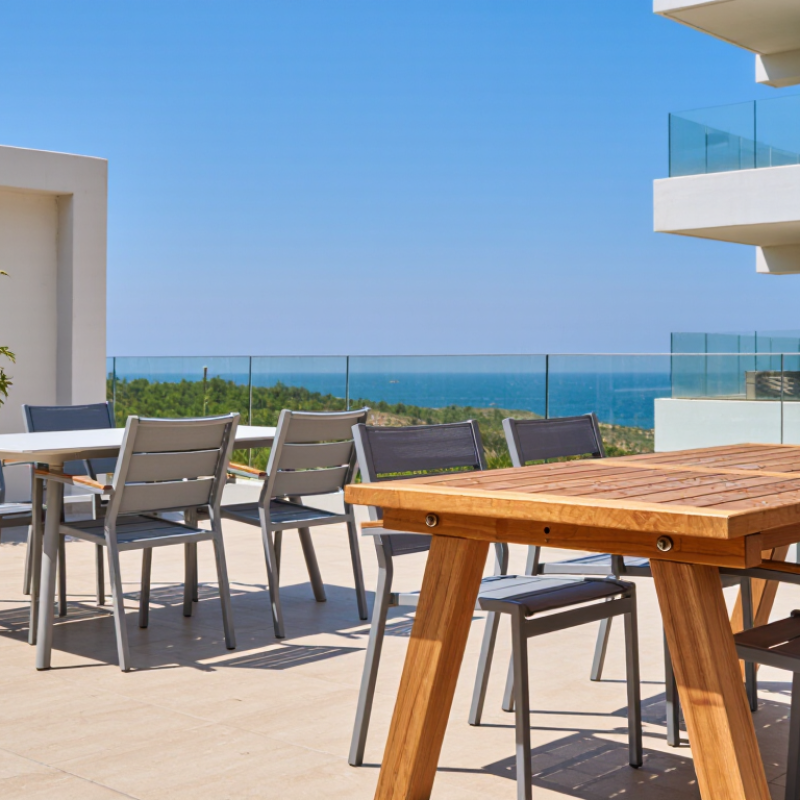
Outdoor tables now serve more than patios. Grand View Research estimates the global outdoor furniture market will expand at about 5.9% annually from 2024 to 2030. This growth reflects hospitality projects, compact urban homes, and longer outdoor dining seasons.
Dining tables suit restaurants, hotels, and family terraces. Choose 72–76 cm table height for standard dining chairs. Bistro tables work well on balconies and narrow cafés. They save floor space, but they feel less comfortable for long meals. Coffee tables support lounges and waiting areas. Folding tables help venues change layouts quickly. However, moving parts may require closer maintenance. Bar-height tables attract casual standing groups and suit outdoor beverage service.
Tips: Match the table to real traffic. Measure chair clearance, walkway width, and storage access before ordering. Aluminum offers low weight and corrosion resistance. Teak gives a warmer appearance, yet it needs planned surface care. High-pressure laminate handles frequent commercial use, but edge sealing matters. The Outdoor Furniture Industry Roundtable reports that weather resistance remains a major purchasing factor for commercial buyers. Still, test samples outdoors before making a global order. Color may shift under intense sunlight, and online images can mislead. A useful specification sheet should state material grades, load limits, drainage design, packaging dimensions, and replacement-part availability. I would not choose only by price; that shortcut often becomes expensive.
Outdoor tables for global buyers in 2026 should match the climate, not only the showroom.
Powder-coated aluminum is light, rust-resistant, and practical for coastal patios. However, damaged coating can expose the metal beneath. Teak handles moisture well, but it needs regular cleaning and may change color outdoors. Recycled HDPE resists rain, insects, and sunlight. It can feel less natural than timber.
Weather resistance depends on details.
Check UV stability, drainage holes, sealed edges, and corrosion-resistant fasteners. In salty air, stainless steel hardware reduces staining, although it still needs rinsing. For freezing regions, avoid surfaces that trap water inside joints. Freeze-thaw movement can split weak connections. Ceramic and tempered glass offer easy cleaning, but chips and impact damage need careful inspection.
Maintenance should be realistic for the final user.
A busy restaurant may prefer aluminum or HDPE over untreated wood. A hotel beside the sea should wash salt from frames every few weeks. Use mild soap, soft cloths, and manufacturer-approved coatings. Harsh chemicals can dull finishes quickly. No table is maintenance-free. That assumption causes avoidable costs. During product checks, inspect welds, fasteners, tabletop joints, and uneven legs. Small defects become obvious after one wet season. Buyers should request material samples and outdoor test data before placing large orders. Samples can mislead, though, because real weather is less forgiving.
Choosing the right outdoor table starts with real measurements, not attractive catalog images. Allow at least 60 centimeters of table edge per diner for basic comfort. For relaxed meals, 70 to 75 centimeters feels more practical.
A 120 x 70 centimeter rectangular table usually seats four people. A 180 x 90 centimeter model can support six diners without crowding plates.
Shape should follow the space and its movement patterns. Rectangular tables suit balconies, terraces, and long dining areas. Round tables encourage conversation and remove sharp corners near busy walkways. Square tables work well in compact patios, but they need careful chair placement.
Leave about 90 centimeters behind each chair whenever possible.
For commercial buyers, check both seated capacity and peak-use capacity. Six chairs may fit, but six large plates, serving bowls, and bags might not.
Use metric and imperial dimensions for international teams. Confirm whether customers prefer shared dishes or individual plates. Consider umbrellas, heaters, and access routes before approving the final size. A foldable option can simplify storage, though its hinges may reduce long-term durability. I have seen tables look perfectly sized on paper but feel cramped outdoors. That mistake is easy to make. Test the layout with cardboard before placing a large order. Recheck capacity after adding armchairs or wider bases.
Outdoor table selection should begin with stability, not appearance. Check the base, leg joints, edge finish, and resistance to uneven paving. The European standard EN 581 addresses safety requirements for outdoor seating and table furniture. Buyers should request test records, load limits, and material specifications. A heavy tabletop is not automatically safer. Poorly balanced legs can still cause tipping.
Comfort also depends on details. Allow enough knee clearance for wheelchairs and different body sizes. The WHO reports that about 1.3 billion people experience significant disability worldwide. This figure appears in its Global Report on Health Equity for Persons with Disabilities. Rounded corners, non-glare surfaces, and reachable table heights support more users. Keep at least one side clear for approach. Small design choices matter.
Weather exposure creates practical risks. Hot metal can burn skin, while rough coatings may catch clothing. Choose finishes tested for moisture, ultraviolet exposure, and cleaning chemicals. The WHO Global Status Report on Physical Activity estimates that 31% of adults are insufficiently active. Comfortable outdoor tables can encourage longer social use, but comfort claims need real testing. No specification is perfect. Buyers should trial samples with older users, children, and wheelchair users before placing large orders. A rushed sample review is still a costly mistake.
How to Choose Outdoor Tables for Global Buyers in 2026?
Choosing outdoor tables for global buyers in 2026 requires more than comparing catalog photos. Material selection must match the destination climate. Aluminum suits humid areas when coatings resist corrosion. Teak and treated hardwood need moisture control and clear maintenance guidance. Recycled materials may support sustainability goals, but buyers should verify composition and durability claims. Ask suppliers for current test reports, factory quality procedures, and production samples. Standards differ across markets, so confirm safety, load capacity, surface stability, and chemical requirements before placing an order.
Cost includes much more than the factory quotation. Calculate materials, tooling, packaging, inspection, freight, insurance, duties, and currency changes. A low unit price can hide expensive repairs. Check whether table legs, fasteners, and replacement parts are packed efficiently. Measure carton dimensions carefully. Poor stacking can waste container space and increase landed cost. Delivery planning also needs realistic production lead times, port schedules, and seasonal congestion. Request a packing sample before mass production. Small packaging changes can prevent scratched surfaces and broken edges.
Reliability comes from documented checks, not confident promises. Use a pre-shipment inspection with measurable criteria. Confirm color tolerance, welding quality, hardware quantity, and carton labels. I have seen attractive samples fail because drainage holes were too small. That mistake was preventable. Buyers should also keep a risk allowance for delays and rejected goods. Perfect forecasts are rare. A practical sourcing plan leaves room for weather, rework, and one unpleasant surprise.
| Table Material / Construction | Best Use Case | Common Global Sourcing Regions | Typical Outdoor Service Life | Indicative FOB Cost / Unit* | Typical MOQ | Production Lead Time | Key Standards and Checks | Main Delivery Considerations |
|---|---|---|---|---|---|---|---|---|
| Powder-Coated Aluminum | Hotels, restaurants, balconies, poolside areas, and frequent repositioning. | East and Southeast Asia, Türkiye, Eastern Europe, and selected Middle Eastern production clusters. | 8–15 years with suitable coating and regular maintenance. | US$45–140 for a standard 60–75 cm table; larger or customized models cost more. | 100–300 units | 30–60 days after approved sample and deposit. | EN 581 for outdoor seating and tables where applicable; coating thickness, adhesion, corrosion resistance, weld quality, and load stability. | Low weight improves container utilization, but nested or knock-down designs require protection against coating scratches. |
| Hot-Dip Galvanized or Powder-Coated Steel | High-traffic commercial terraces, public spaces, and windy locations requiring high rigidity. | China, India, Türkiye, Poland, and other established metal-furniture manufacturing regions. | 7–15 years; coastal exposure requires enhanced pretreatment and coating control. | US$50–160 for a standard table, depending on steel gauge, finish, and base design. | 100–300 units | 35–70 days, including fabrication and finishing. | EN 581 where applicable; verify galvanizing coverage, coating adhesion, salt-spray test protocol, sharp edges, welds, and anti-tip performance. | Higher shipping weight increases ocean freight cost; use stackable bases and reinforced export cartons. |
| Solid Teak or Other Durable Hardwood | Premium hospitality projects, garden dining, resorts, and natural-design collections. | Indonesia, Vietnam, India, Brazil, and certified forestry supply chains in several regions. | 10–25 years when properly dried, assembled, and maintained. | US$100–350 for a standard table; certified timber and thicker components raise cost. | 50–150 units | 45–90 days, with additional time for kiln drying or custom finishing. | EN 581 where applicable; verify legal timber documentation, moisture content, species traceability, joint strength, and finish durability. | Moisture changes can cause movement; use moisture-resistant packing, corner protection, and clear maintenance instructions. |
| HDPE or Recycled Plastic | Schools, parks, casual dining, coastal sites, and low-maintenance public installations. | North America, Europe, China, and other regions with established plastic extrusion or molding capacity. | 10–20 years, depending on UV stabilizers, color, and structural design. | US$80–260 for a standard table; recycled content and molded tooling affect the price. | 100–500 units; custom tooling may require a larger commitment. | 30–75 days; new molds can add 20–45 days. | EN 581 where applicable; verify UV exposure results, recycled-content documentation, color consistency, load capacity, and dimensional stability. | Usually durable in transit, but large molded parts need dimensional checks and protection from heat deformation. |
| Ceramic, Sintered Stone, or Tempered-Glass Top | Contemporary hospitality, residential patios, and premium dining applications. | China, Spain, Italy, Türkiye, Vietnam, and regional glass or ceramic production centers. | 8–15 years when the top, frame, and edge protection are correctly specified. | US$90–320 for a standard table; thickness, edge treatment, and frame material drive variation. | 50–200 units | 40–80 days, including top production and inspection. | EN 581 where applicable; verify impact resistance, edge finishing, thermal shock behavior, frame stability, and applicable glass safety requirements. | Breakage risk requires A-frame or separated packing, drop testing, and a higher allowance for replacement parts. |