How to Choose Metal Chairs for Global Sourcing in 2026?
Choosing Metal Chairs for global sourcing in 2026 means balancing price with durability, consistency, and delivery risk. A low quotation can look attractive until frame thickness varies, welds need rework, or packaging fails during a long shipment. Buyers need evidence they can check, not just confident supplier claims.
Grand View Research estimated the global furniture market at USD 736.62 billion in 2023 and projected a 5.9% compound annual growth rate from 2024 through 2030. This broad market includes many product types; it is useful context, not a forecast for metal chairs specifically. Small details matter. UN Comtrade trade records can help sourcing teams compare country-level flows and supplier markets. However, customs categories may not clearly distinguish chairs by frame material or intended use, so trade data alone cannot identify the best factory.
A practical evaluation combines market research with product-level checks. Request material specifications, production samples, inspection records, and clear packaging details. Examine weld consistency, coating coverage, joint stability, and how chairs stack in a carton. Ask how the supplier controls changes between approved samples and mass production. These checks do not guarantee a smooth order. They do make problems easier to spot before shipment. Some buyers still overvalue the lowest unit price; that is an understandable shortcut, but not always a sound one. This guide outlines how to compare suppliers, assess quality, and plan global purchases with clearer evidence.

Define Requirements for Metal Chairs in Global Markets
Global sourcing begins with a usable requirement, not a catalog photograph. State chair dimensions, allowable tolerances, and target load in measurable terms. Record seat height, width, depth, backrest angle, and floor clearance. Add stacking limits when storage space is expensive. Small details matter.
Specify the metal grade, tube thickness, weld quality, and surface finish. Powder coating may suit humid regions, but salt exposure needs stronger corrosion protection. Define acceptable color variation with physical samples, not screen images. Ask suppliers for production samples and independent test reports covering stability, strength, and coating adhesion. Factory experience shows that attractive prototypes can still fail during repeated-use testing.
Global markets also require packaging requirements. List carton strength, corner protection, moisture barriers, labeling languages, and pallet dimensions. Requirements may differ between hospitality, education, and residential use. Include local safety expectations and accessibility considerations before production begins. A first specification is rarely perfect. Early samples often reveal uncomfortable edges, weak stacking points, or excessive packaging waste. Record those findings and revise the document. Do not rely on verbal promises; use signed drawings, inspection criteria, and traceable approval records.
Compare Materials, Designs, and Manufacturing Methods
How to Choose Metal Chairs for Global Sourcing in 2026?
Compare Materials, Designs, and Manufacturing Methods
Material choice affects weight, corrosion resistance, cost, and maintenance. Steel often suits busy dining areas, especially with a durable powder-coated finish. Aluminum is lighter and easier to move, but its frame may flex if tubing is too thin. Stainless steel can handle damp settings, though its higher cost may not fit every project. Ask suppliers for alloy details, coating specifications, and test reports. A heavier chair can feel reassuring, but weight alone proves little.
Tips: Feel the weight. Check the welds. Inspect samples under bright light for rough joints, sharp edges, and uneven coating. Sit in a sample chair and test it on hard flooring. Ask whether the quoted sample uses the same tubing, fasteners, and finish as bulk production. Small details matter.
Design and manufacturing choices also shape long-term value. Stacking chairs save warehouse space, while arms and curved backs can improve comfort but complicate packing. Compare welded frames with bolted designs: welded joints can feel rigid, while bolts may allow repairs or replacement. Neither option is automatically better. Request drawings, carton dimensions, finish samples, and a clear production schedule. For large orders, approve a pre-production sample and agree on inspection points before manufacturing begins. Details can still be missed, so keep the requirements specific and written.
How to Choose Metal Chairs for Global Sourcing in 2026?
Compare representative material density and yield strength when evaluating durability, shipping weight, forming, and manufacturing requirements.
Carbon Steel
High stiffness and cost efficiency. Commonly produced with tube bending, stamping, MIG welding, and powder coating.
Stainless Steel
Good corrosion resistance for hospitality and outdoor environments. TIG or MIG welding and brushed or polished finishing are typical.
Aluminum
About one-third the density of steel, helping reduce freight weight. Extrusion, die casting, bending, and welding are common methods.
Data shown are representative engineering values for low-carbon steel, 304 stainless steel, and 6061-T6 aluminum. Actual performance varies by alloy, wall thickness, temper, welding design, and applicable load standards.
Assess Supplier Capability, Certifications, and Compliance
How to Choose Metal Chairs for Global Sourcing in 2026?
Assess Supplier Capability, Certifications, and Compliance
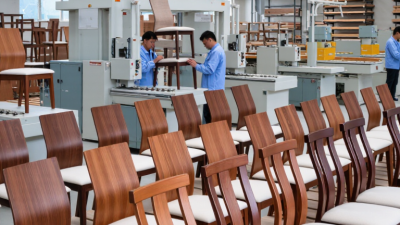
A reliable supplier should show how each chair moves from drawing to finished product. Ask for production capacity, material specifications, weld inspection records, and a sample from the same process planned for your order. Check whether the supplier can trace steel batches and coating lots. A polished sample is useful, but it does not prove consistent mass production. Ask for recent inspection reports and clarify who performs them.
Certifications matter only when they fit the destination market and the chair’s intended use. Verify certificate scope, issue date, product model, and testing laboratory directly with the issuing organization. Request evidence for load capacity, stability, corrosion resistance, and coating performance where relevant. Requirements vary by market. Do not assume one certificate covers every configuration or country. Small changes can matter.
Tips: Put key requirements in the purchase specification, including dimensions, finish, packaging, and acceptable defect limits. Ask how nonconforming chairs are recorded and corrected. Then compare the written answers with a factory visit or live production review, if practical. One detail is easy to miss: confirm that compliance documents match the exact chair being ordered.
Calculate Total Landed Cost and Delivery Timelines
For metal chairs, compare landed cost, not just the factory quote. Add chair and packaging costs, inland transport, export handling, ocean freight, insurance, import duties, brokerage, port charges, and final delivery. Ask suppliers to confirm carton dimensions, gross weight, and pallet loading; these details can change freight charges. Small charges add up. Request a written quote with its validity period and currency, then model a higher freight rate and possible inspection or storage fees. Duties depend on destination and product classification, so verify them with a qualified customs professional.
Delivery dates need the same scrutiny. The World Bank’s 2023 Logistics Performance Index reports an average of 44 days for goods to travel from a port of entry to their destination, with substantial variation between shipments. That figure is not a promise for any specific route. Build your schedule from production, inspection, port cut-off, sailing, customs clearance, and final-mile delivery. UNCTAD’s Review of Maritime Transport 2024 notes that shipping carries over 80% of world trade by volume, making route disruptions relevant to sourcing plans. Build in slack. One weakness in my own estimates: I sometimes treat port handling as fixed. It isn’t. Ask the forwarder for recent route-specific transit ranges, and include a buffer before any warehouse or retail deadline.
How to Choose Metal Chairs for Global Sourcing in 2026? - Calculate Total Landed Cost and Delivery Timelines
Planning comparison for 500 stackable metal chairs delivered to a U.S. warehouse. Figures are illustrative estimates in USD, not supplier quotes. Actual freight, duties, taxes, and transit times depend on specifications, origin, destination, shipment date, and applicable trade rules.
| Sourcing origin |
Production
(days) |
Ocean transit
(days) |
FOB price
per chair |
Freight + insurance
per chair |
Assumed duty
on CIF |
Duty
per chair |
Port, clearance + inland
per chair |
Estimated landed cost
per chair |
Estimated total
for 500 |
Estimated door-to-door
(days) |
| China |
35 |
28 |
$22.00 |
$4.80 |
5%* |
$1.34 |
$2.20 |
$30.34 |
$15,170 |
73 |
| Vietnam |
40 |
25 |
$24.00 |
$5.40 |
0%* |
$0.00 |
$2.40 |
$31.80 |
$15,900 |
75 |
| Turkey |
25 |
18 |
$29.00 |
$3.20 |
8%* |
$2.58 |
$2.00 |
$36.78 |
$18,390 |
51 |
| India |
45 |
30 |
$21.00 |
$5.80 |
8%* |
$2.14 |
$2.60 |
$30.54 |
$15,270 |
87 |
Calculation: Landed cost per chair = FOB price + freight and insurance + estimated import duty + port, clearance, and inland delivery. CIF is FOB plus freight and insurance. Door-to-door estimates include production, transit, and an estimated 8–12 days for port handling, customs clearance, and inland delivery. *Duty rates are scenario assumptions only; the actual rate depends on the chair’s tariff classification, country of origin, trade measures, and any qualifying preference. Confirm the HS code and current duty with a qualified customs broker before ordering. Taxes, inspection, warehousing, packaging changes, and demurrage are excluded.
Verify Quality Controls and Manage Sourcing Risks
How to Choose Metal Chairs for Global Sourcing in 2026?
Quality controls should be verified before comparing prices. A low quote means little if welds crack during routine use. Request production samples from the actual factory, not showroom pieces. Inspect weld penetration, frame alignment, sharp edges, coating thickness, and load performance. Check whether each test has a date, method, and responsible inspector. Factory records should match the delivered chair, including material grades and batch numbers.
From sourcing experience, small details often reveal larger risks. Ask for recent audit reports and visit the production line when possible. An independent laboratory can confirm strength, corrosion resistance, and coating durability. Keep photo records of inspections. They support clear decisions when defects appear later. Shipping delays, raw material shortages, and inconsistent subcontractors also need written contingency plans. Never depend on one verbal promise. A perfect checklist does not exist. I have missed minor packaging weaknesses before, and they caused avoidable scratches during transit.
Tips: Approve a sealed reference sample before mass production. Use random inspections at different stages. Confirm carton strength with a simple drop test. Review corrective actions, not just inspection scores. Keep payment milestones linked to measurable quality results. If a supplier resists transparent testing, treat that resistance as useful information.