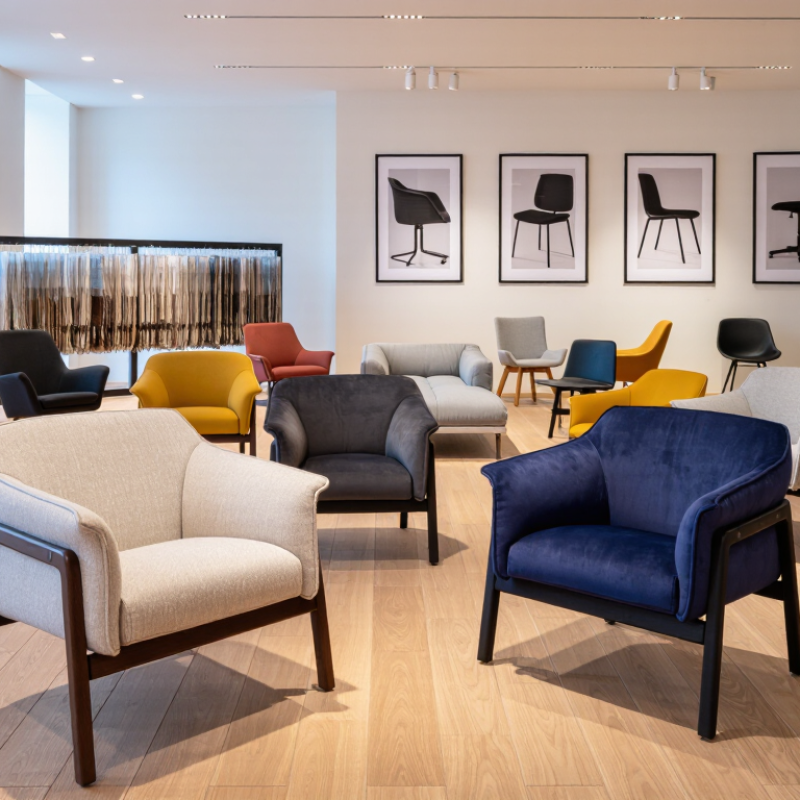
Choosing Arm Chairs for wholesale buying requires more than attractive photographs and a competitive unit price. Buyers must examine comfort, construction, packaging, and repeat-order reliability. Ludwig Mies van der Rohe, a renowned architect and furniture designer, reportedly said, “A chair is a very difficult object. A skyscraper is almost easier.” His observation remains practical today. A chair must support the body, survive daily movement, and fit naturally into a room.
Begin with the intended market. A hotel lobby may need firm cushions, stain-resistant upholstery, and reinforced arms. A residential retailer may prefer softer seating, warmer fabrics, and distinctive colors. Check the seat height, arm height, foam density, frame joints, and weight capacity. Sit in a sample for several minutes. Small discomfort becomes obvious later. Measure doorways and cartons, too. A beautiful chair that arrives damaged is still a poor wholesale choice.
Ask suppliers for material specifications, production photos, testing information, and replacement-part policies. Compare fabric swatches under strong light. Review stitching around corners, where weak seams often appear first. Inspect the underside for dust covers, staples, and uneven frames. Confirm minimum order quantities, lead times, labeling, and packaging protection before negotiating price. Cheap pricing can hide costly defects.
Do not trust one sample completely. Production can vary.
A practical shortlist should balance design, comfort, durability, landed cost, and customer expectations. Some buyers overvalue appearance and overlook logistics. I have found that a slightly heavier Arm Chair often feels more stable, but shipping costs may change the decision. Recheck the numbers. Wholesale success depends on evidence, not excitement.
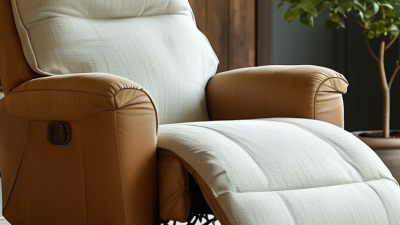
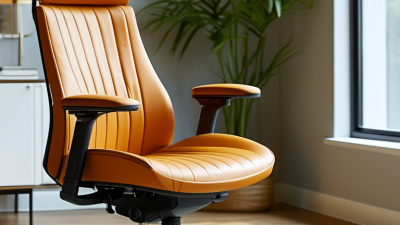
Wholesale armchair buying starts with the user, not the showroom image. Lounge chairs suit hotels, waiting areas, and reading corners. Dining armchairs need upright backs and compact footprints. Recliners require stronger mechanisms and deeper cartons. Task armchairs need adjustable support and durable upholstery. Grand View Research valued the global home furniture market at USD 220.7 billion in 2023. It expects a 5.7% compound annual growth rate through 2030. This growth increases choice, but also creates inconsistent quality.
Define wholesale needs before selecting a style. Measure seat height, width, depth, and arm clearance. Check foam density, frame material, fabric abrasion, and carton dimensions. For commercial seating, request testing aligned with ANSI/BIFMA X5.4. Fortune Business Insights valued the broader furniture market at USD 516.66 billion in 2022. Its forecast reaches USD 780.43 billion by 2030. These reports use different market scopes. Do not compare them blindly. From practical sourcing work, a beautiful chair can still fail through poor stacking, oversized packaging, or unclear replacement parts. Some assumptions need challenging.
Tips: Build a sample matrix with price, MOQ, lead time, dimensions, and test documents. Photograph every sample from the front and side. Sit for ten minutes. Short trials miss discomfort. Ask suppliers for carton drop-test records and fabric specifications. Confirm whether colors remain consistent across production batches. A slightly higher unit cost may reduce returns, but only when durability is verified.
How to Choose Arm Chairs for Wholesale Buying?
Wholesale arm chairs need clear standards for quality, material, and comfort. Start with the frame. Kiln-dried hardwood or reinforced metal usually offers better stability than thin, untreated components. Check joints under pressure. They should not creak, shift, or open.
BIFMA’s X5.4 lounge-seating standard includes durability tests reaching 100,000 cycles. Ask suppliers for test records, not vague claims. CSIL’s World Furniture Outlook 2024 also identifies material efficiency and product durability as major furniture industry priorities. Choose upholstery with documented abrasion results, colorfastness, and cleaning performance. Leather-like surfaces may look practical, but heat and poor ventilation can reduce comfort. Fabric can feel softer, yet it may demand more maintenance. Comfort is measurable. Compare seat height, depth, cushion recovery, and armrest height with your target market. A chair that feels excellent for five minutes may fail after two hours.
Tips: Request one sample before placing a bulk order. Sit in it with both feet flat. Check whether the back supports the lower spine. Measure carton size and chair weight, too. These details affect warehouse costs and delivery damage. My own mistake would be judging comfort from photographs. They hide hard edges and weak padding. Do not guess. Ask for production samples, material certificates, load-test results, and inspection photos. Leave a small allowance for handmade variation, but reject uneven seams, unstable legs, and sharp hardware.
Wholesale armchair buying requires more than a low quote. Start by checking supplier consistency, material details, and production capacity. Request current photos, a physical sample, and a written specification sheet. Inspect frame joints, foam density, fabric seams, and carton protection. A sample can look excellent while bulk production changes. Ask for the inspection process, not only promises. Ask for evidence.
Compare prices using landed cost, not unit price alone. Include packaging, freight estimates, sampling fees, payment terms, and inspection charges. Confirm that the quoted fabric, cushion filling, and hardware match the approved sample. A cheaper chair may need thicker cartons or stronger corner protection. That difference appears after transit. Request tiered pricing for several quantities. It shows whether a larger order creates real savings. I have learned to question unusually low prices. They often hide assumptions. Sometimes my own estimate is wrong.
Minimum order quantities deserve careful negotiation. A 20-chair trial may be safer than ordering 200 units immediately. This matters when the supplier is new. Yet a low MOQ can increase unit costs or limit fabric choices. Confirm lead times, reorder terms, defect handling, and replacement procedures in writing. Keep records of measurements and color references. Do not guess. Reliable suppliers answer specific questions clearly and report delays early. If responses remain vague, pause the purchase.
How to Choose Arm Chairs for Wholesale Buying?
Checking Customization, Compliance, and Production Capabilities
Wholesale armchair buying demands more than attractive photos and a low quotation. Customization should be confirmed through drawings, material samples, and a physical prototype. Check seat width, arm height, foam density, leg material, stitching, and fabric performance. A chair may look comfortable but feel too firm after ten minutes.
I once approved a sample without testing its packaging. Several corners arrived marked. That was a costly lesson. Ask the supplier for carton dimensions, drop-test procedures, loading plans, and replacement policies. Small details matter. Request a signed specification sheet before production begins. It should identify every approved material and measurement.
Compliance also requires careful verification. Confirm the standards required in your target market, including flammability, chemical content, structural strength, and labeling. Ask for current test reports from qualified laboratories, not vague assurances. Production capability matters just as much. Review monthly capacity, quality-control checkpoints, stitching equipment, and experience with repeat orders. A factory may produce one excellent chair but struggle with 500 identical units. Request a pilot batch and inspect random pieces. Look for uneven seams, loose joints, color differences, and unstable legs. Perfect consistency is difficult. Honest inspection is essential.
| Evaluation Dimension | What to Check | Practical Reference Data | Recommended Wholesale Requirement | Priority | Evidence to Request |
|---|---|---|---|---|---|
| Product Dimensions | Overall width, depth, height, and seat height must match the target room and retail category. | Common lounge armchairs are approximately 700–900 mm wide, 750–950 mm deep, and 750–950 mm high. Seat height is often about 400–480 mm. | Approve a dimension drawing with tolerances, such as ±5 mm for critical assembled dimensions. | Required | Dimensioned technical drawing, approved sample, and final inspection report. |
| Customization Scope | Assess options for upholstery, colors, legs, stitching, foam density, packaging, and private-label components. | Customization is normally easier when changes use existing frames, molds, hardware, and production processes. | Define the changeable components, development charges, sample approval process, and minimum order quantity for each option. | High | Material swatches, color cards, CAD drawings, prototype schedule, and written quotation. |
| Frame Construction | Verify frame material, joint design, reinforcement, moisture condition, and resistance to loosening. | Typical upholstered chairs may use kiln-dried solid wood, plywood, or a combination of engineered wood and solid wood reinforcement. | Require a documented frame specification and inspection of joints, fasteners, glue lines, and visible defects. | Required | Material declaration, construction drawings, moisture records where applicable, and frame inspection photos. |
| Foam and Comfort | Check foam type, density, firmness, resilience, seat support, and long-term compression performance. | Flexible polyurethane foam is widely used in upholstered seating. Higher-density foam generally provides better durability, but comfort also depends on firmness and construction. | Specify foam density and firmness separately for the seat, back, and arms; approve comfort through a physical sample. | High | Foam specification sheet, sample cut section, seat-comfort evaluation, and compression test data if available. |
| Fabric or Leather | Review abrasion resistance, colorfastness, seam strength, pilling, cleanability, and flammability requirements. | Martindale abrasion results are commonly used for upholstery comparison. A higher cycle value indicates greater abrasion resistance, but does not alone prove overall suitability. | Set a project-specific abrasion target and request performance data for every proposed upholstery option. | High | Fabric technical data sheet, test reports, color approval, roll inspection standard, and care instructions. |
| Product Safety Compliance | Identify the destination market and applicable requirements for stability, strength, durability, flammability, and restricted substances. | Requirements vary by country, product type, upholstery material, and intended use. A single global compliance claim is not sufficient. | Create a market-specific compliance checklist before production and confirm who pays for testing. | Required | Applicable test reports, declarations, chemical compliance documents, and traceable laboratory information. |
| Chemical and Material Documentation | Check wood, foam, adhesives, coatings, textiles, metals, and packaging for restricted-substance and material-origin requirements. | Common documentation may include material declarations, restricted-substance statements, and wood legality or chain-of-custody records where required. | Require current documents tied to the actual materials and production site used for the order. | Required | Material declarations, safety data sheets where relevant, timber documents, and supplier traceability records. |
| Load and Durability Testing | Evaluate seat, back, arm, leg, and frame performance under repeated use and foreseeable loading. | Commercial and domestic seating may be tested under different standards and load categories; the correct test method depends on the intended market. | Use a written test plan that identifies the applicable standard, loading method, cycle count, pass criteria, and sample quantity. | Required | Independent or qualified laboratory report, internal test records, corrective-action reports, and retained samples. |
| Production Capacity | Confirm available assembly lines, upholstery capacity, skilled labor, equipment, and realistic monthly output. | Capacity should be measured using the specific chair model and approved configuration, not only the facility’s total theoretical output. | Request capacity by model and month, including peak-season limitations and capacity reserved for existing orders. | High | Capacity plan, production-line photos, staffing plan, current order loading, and sample-to-mass-production timeline. |
| Minimum Order Quantity | Compare minimum quantities for standard products, new colors, custom fabrics, modified frames, and packaging. | Custom upholstery and special components often require higher minimum quantities than standard configurations. | Obtain separate MOQs for each customization level and confirm whether mixed colors or mixed models are allowed. | High | Formal MOQ matrix, component MOQ list, surcharge schedule, and production planning assumptions. |
| Lead Time | Separate development, sampling, material purchasing, production, inspection, and shipping preparation time. | Lead time varies with material availability, order size, customization, seasonal demand, and testing requirements. | Use milestone dates rather than one general lead-time number, with written consequences for approved delays. | High | Project timeline, purchase-order schedule, material reservation record, and production progress reports. |
| Quality Control System | Check incoming-material inspection, in-process controls, final inspection, defect classification, and corrective action. | AQL sampling is commonly used for batch inspection, but the acceptable quality limit and inspection levels must be agreed in advance. | Define critical, major, and minor defects; establish an inspection plan and require corrective-action closure. | Required | Quality manual, inspection checklist, defect standards, sample inspection report, and corrective-action records. |
| Packaging and Logistics | Review carton strength, corner protection, moisture protection, stacking limits, and packing efficiency. | Flat-pack, knock-down, and fully assembled packaging have different risks, labor needs, and shipping-volume impacts. | Approve a packaging prototype and calculate packed dimensions, gross weight, carton quantity, and container utilization. | High | Packaging specification, carton test results, packing photos, drop-test records where applicable, and packing list. |
| After-Sales Support | Assess spare parts, replacement upholstery components, warranty process, complaint response, and root-cause analysis. | Common replaceable items may include legs, glides, fasteners, covers, cushions, and selected frame components. | Agree warranty duration, response time, spare-parts availability, claim evidence, and responsibility for confirmed defects. | Medium | Warranty policy, spare-parts list, claim form, response-time commitment, and sample replacement procedure. |
| Commercial Risk Review | Compare total landed cost rather than unit price alone, including tooling, testing, packaging, freight, duties, and rework. | A lower ex-factory price can be offset by higher customization charges, packaging volume, quality losses, or compliance costs. | Prepare a total-cost model with clearly separated one-time charges, recurring costs, assumptions, and payment milestones. | High | Itemized quotation, tooling terms, testing fees, Incoterms, payment schedule, and landed-cost worksheet. |

Note: Technical requirements and compliance obligations should be confirmed against the destination market, intended use, and the latest applicable standards before placing a wholesale order.
How to Choose Arm Chairs for Wholesale Buying?
Shipping costs can change the real value of an armchair. Measure the packed carton, not only the assembled chair. A wide armrest may add little comfort but consume valuable container space. Compare cubic volume, carton weight, and pallet height before confirming an order. Small differences multiply quickly across hundreds of units.
Storage needs equal attention. Choose packaging that protects corners, legs, and upholstery during repeated handling. Moisture-resistant cartons help in humid warehouses, but they are not a complete solution. Keep cartons off the floor and allow airflow around stacked units. Check whether the chairs can stack safely without crushing the armrests. Some designs look efficient until the first warehouse test.
Long-term wholesale value depends on more than the purchase price. Inspect frame joints, cushion recovery, stitching, and surface resistance through sample testing. Ask for consistent dimensions across production batches. A chair that varies by two centimeters can create display problems and customer complaints. Review replacement parts, packaging durability, and expected maintenance needs. I would also question optimistic durability claims without test records. A lower-cost chair may win the initial quote, yet generate higher handling and service costs later. That calculation is easy to overlook.
Planning Shipping, Storage, and Long-Term Wholesale Value
Typical packed-volume estimates show how chair design affects container utilization. Compact dining armchairs generally require less storage space and allow higher shipment quantities, while lounge chairs and recliners require more cubic capacity. Actual loading results depend on packaging dimensions, stacking limits, and the selected container.