
Skip to content

What Is an Office Furniture Store?

An Office Furniture Store is more than a room of desks and chairs. It is a place to compare products, test comfort, and plan a workspace around real tasks. A small business owner might need compact desks and lockable storage. A facilities manager may be choosing adjustable chairs, meeting tables, and durable flooring for several locations. The right store helps connect those needs with product specifications, delivery options, and practical advice.

Industry data shows why these choices matter. Grand View Research estimated the global office furniture market at about US$59.9 billion in 2023, reflecting demand across workplaces and product categories. Market estimates can differ because researchers define the sector in different ways. Gensler’s 2024 Global Workplace Survey, based on nearly 16,000 workers in 15 countries, also highlights the importance of workplace experience and choice. A furniture purchase is not a complete workplace strategy, but it can shape how people sit, meet, focus, and move through a room.

Look closely. A useful Office Furniture Store should make comparisons clear, from chair adjustments to desk dimensions and material finishes. Ask about warranties, assembly, lead times, and replacement parts before ordering. These details are easy to overlook. They matter when a chair must fit beneath a desk or a delivery must pass through a narrow doorway. No store can promise a perfect fit for every team. Thoughtful questions, accurate measurements, and a realistic budget make the decision more dependable.
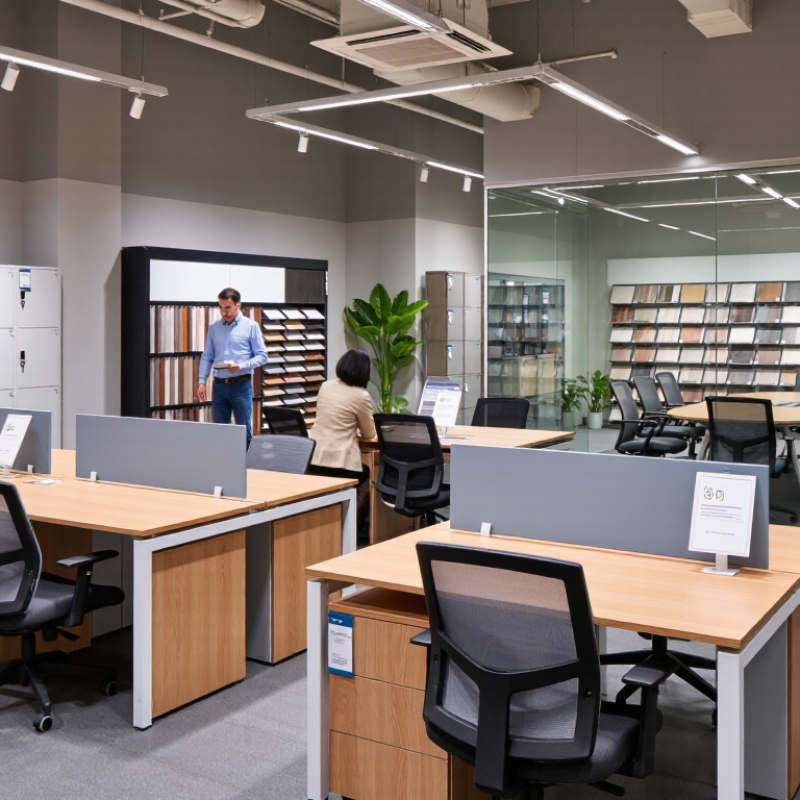
What Is an Office Furniture Store?

Definition and Purpose of an Office Furniture Store

An office furniture store is a retail and planning resource for furnishing workplaces. It offers desks, chairs, storage, and meeting tables, often with help measuring rooms and comparing materials. Its purpose goes beyond selling products: staff can help match furniture to daily tasks, available space, and practical needs such as cable access or adjustable seating. A chair can look right in a showroom and still feel wrong after a long shift. Fit matters.

The scale of workplace research shows why one layout cannot suit everyone.

Gensler’s 2024 Global Workplace Survey gathered responses from 16,000 workers across 15 countries. That breadth suggests workplace needs vary across roles and settings; a store can help translate those needs into choices, though a showroom cannot reproduce every workday.

Visitors should check seat height, desk depth, reach, and how drawers open in a real room. A store may also coordinate delivery, assembly, and space planning, reducing guesswork when several workstations need to fit together.

The U.S. Bureau of Labor Statistics reported 2.6 million nonfatal workplace injury and illness cases in private industry in 2023. That figure is not specific to office furniture, and furniture alone cannot prevent injuries. Still, thoughtful selection can support more usable work areas.

Small details matter.

Check dimensions, adjustability, and warranties before ordering; even experienced buyers can overlook a doorway or a tight corner.

Types of Furniture and Products Available

An office furniture store supplies the pieces that make workplaces usable, from a single home-office desk to a full team floor. Its core range usually includes desks, task chairs, conference tables, reception counters, filing cabinets, and storage shelves. Many stores also carry monitor arms, desk lamps, cable trays, and acoustic screens.

Small details matter: a cable tray can keep cords off the floor, while a low cabinet can double as a printer stand. Grand View Research estimated the U.S. office furniture market at $16.6 billion in 2023, reflecting demand across varied workplace settings.

A large market, though, does not mean every product suits every room.

Product categories often extend beyond standard desks and chairs. Height-adjustable desks support sitting and standing, while ergonomic chairs offer adjustable seat height, lumbar support, and armrests. Meeting areas may need stackable chairs and folding tables; shared offices often benefit from lockers and mobile pedestals.

Some stores offer installation, space planning, or fabric samples, but these services vary. Measure doorways, desk depth, and walking space before choosing. A chair can feel fine for ten minutes, then wrong by lunch. That is easy to miss.

The U.S. Bureau of Labor Statistics recorded 2.8 million nonfatal workplace injuries and illnesses in private industry in 2022; furniture alone cannot prevent them, but suitable layouts and adjustable equipment can support safer, more comfortable work. Check dimensions and adjustment ranges in person when possible.

Services Offered by Office Furniture Stores

An office furniture store does more than display desks and chairs. Its services often begin with a site visit, measurements, and a discussion of how people work. A planner can map walkways, desk spacing, storage, and power access before suggesting layouts. They may also assess chair fit, monitor height, and reach to everyday tools. Small details matter. A beautiful plan can still fail at the desk if drawers block a walkway or glare hits the screen.

Stores may coordinate delivery, assembly, installation, and removal of old furniture. Some offer repairs, reconfiguration, or refurbished pieces, which can reduce replacement needs. The U.S. Environmental Protection Agency’s 2018 Advancing Sustainable Materials Management report estimated that 12.1 million tons of furniture and furnishings entered the U.S. waste stream; 80.1% went to landfill. That figure covers furniture broadly, not office items alone, but it shows why take-back and reuse options deserve attention. Ask whether installers protect floors, label parts, and remove packaging. Get the scope in writing. One overlooked cable route can create a frustrating mess. A store’s service quality is easiest to judge by how clearly it handles these practical details.

Customers and Business Needs Served

What Is an Office Furniture Store?

Customers and Business Needs Served

An office furniture store helps individuals and organizations choose furnishings for how they actually work. A home-office customer may need a compact desk, an adjustable chair, and storage that fits beside a window. A growing company might need workstations, meeting tables, and seating for a shared reception area. The needs differ. Measurements matter.

Useful guidance goes beyond appearance. Staff can help compare chair adjustments, desk heights, materials, and available space. For a small office, checking doorways and elevator dimensions can prevent delivery problems. For a busy team, surfaces that are easy to clean and sturdy storage may be practical priorities. These details save hassle.

Businesses may also need coordinated delivery, assembly, and phased purchasing as teams grow. A store that asks about headcount, work patterns, budget, and room layout can suggest more suitable options. Still, furniture cannot fix every workflow issue. I have seen attractive layouts leave too little room for cables or chair movement. A simple floor plan and careful measurements are worth bringing before placing an order.

What Is an Office Furniture Store? — Customers and Business Needs Served
Customer or Business Type Common Furniture Needs Related Store Services Practical Considerations
Small businesses and start-ups Desks, office chairs, storage, and furniture for shared or private work areas Product selection, delivery, and optional assembly Available floor space, budget, expected headcount, and room to grow
Growing companies Matching workstations, meeting tables, task chairs, and additional storage Planning support, coordinated ordering, delivery scheduling, and installation Consistent layouts, compatible furniture, phased purchasing, and minimal disruption
Home-office users A work desk, adjustable chair, task lighting, and compact storage Product guidance, online or in-store purchasing, and home delivery Room dimensions, comfortable posture, cable management, and household use
Large organizations Furniture for workstations, offices, reception areas, and meeting rooms Space planning, bulk purchasing, delivery coordination, and installation Project timelines, access to the site, procurement requirements, and standardization
Educational and training facilities Desks, chairs, tables, storage, and furniture for collaborative learning spaces Layout assistance, product sourcing, delivery, and assembly Room capacity, durability, flexibility, and ease of rearrangement
Public-facing workplaces Reception desks, waiting-area seating, consultation tables, and storage Space planning, coordinated product selection, and installation Visitor flow, accessibility, cleanability, and a welcoming appearance
Businesses updating an existing office Replacement chairs, desks, storage, or furniture for a redesigned layout Product comparison, removal coordination where available, delivery, and assembly Reuse of existing furniture, measurements, disposal arrangements, and work schedules
What an office furniture store provides A range of furniture and workspace products for professional and home-office use Retail sales, product information, and services that may include planning, delivery, or installation Service availability, lead times, dimensions, warranties, and return terms vary by seller

Factors to Consider When Choosing a Store

What Is an Office Furniture Store?

Factors to Consider When Choosing a Store

Choosing an office furniture store involves more than comparing prices. Start with the room itself. Measure doorways, desk areas, and walkways before visiting. A floor plan with marked measurements can prevent a desk from blocking a cabinet or chair from hitting a wall. Small details matter.

Check whether the store displays furniture you can test. Sit in a chair for several minutes, adjust its height, and notice whether your feet rest flat. Ask what materials are used and how surfaces handle everyday wear. Clear answers are a good sign. Vague promises are not.

Delivery and assembly deserve close attention. Confirm fees, estimated timing, and what happens if an item arrives damaged. Read the return terms before ordering, especially for custom sizes. Compare warranties, but check what they actually cover. A long warranty may still exclude common wear. I can overlook service details when a showroom looks polished; that is worth questioning. The best choice may not be the cheapest or the most attractive. It should fit your space, work habits, and budget without creating avoidable hassles.

Scroll To Top