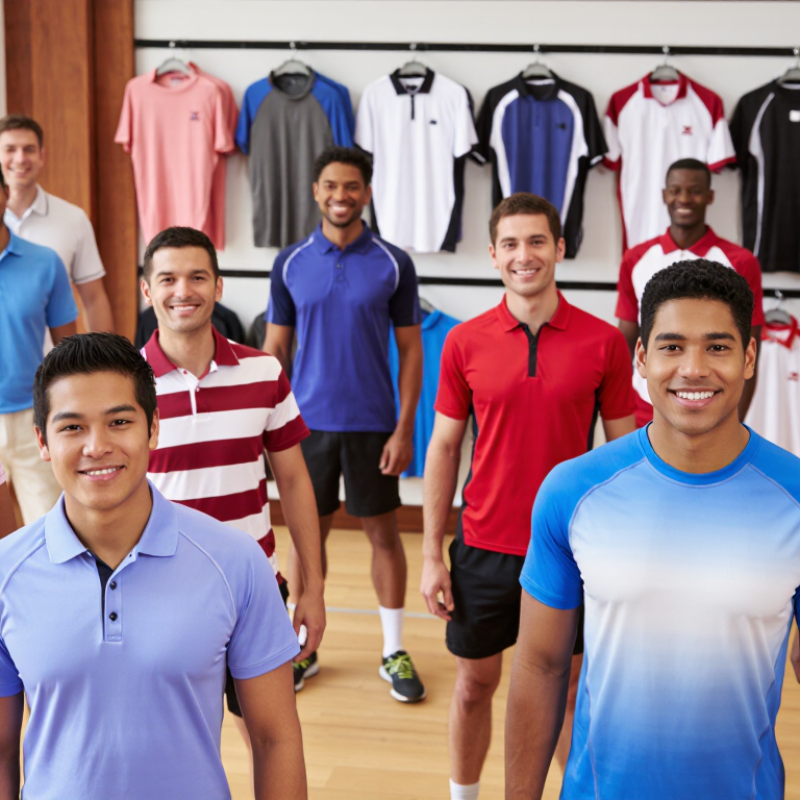
The global Sport Shirt market is no longer limited to stadiums, gyms, or team uniforms. It now includes golf polos, rugby tops, cycling jerseys, tennis shirts, and everyday performance apparel. Buyers face a crowded supply landscape, where fabric weight, moisture control, collar construction, and size consistency can change commercial results.
Grand View Research estimated the global sports apparel market at approximately USD 248.9 billion in 2023. Its report also projects continued growth through 2030, supported by fitness participation, athleisure demand, and online retail. McKinsey’s Sporting Goods reports identify similar momentum, while warning that consumers increasingly expect value, durability, and responsible production. These figures describe sports apparel broadly, not Sport Shirt sales alone. The distinction matters.
Bill Bowerman, Nike’s co-founder, famously said, “If you have a body, you are an athlete.” His words still explain why performance clothing reaches ordinary consumers. A shirt may begin with a professional specification, then appear on a commuter, student, or weekend player.
This guide examines ten Sport Shirt types for global buyers. Each section considers use case, fabric behavior, construction, customization, and purchasing risk. Expect practical details, such as 140–180 GSM polyester, flatlock seams, UPF ratings, and collar recovery after washing. No single shirt fits every market. That is the uncomfortable part. Climate, sport culture, budget, and buyer expectations can overturn a seemingly strong choice. The best decision usually comes from testing samples, checking supplier documentation, and comparing real wear results.
A sport shirt is a casual or smart-casual woven shirt designed for movement, comfort, and everyday presentation. Unlike a formal dress shirt, it often uses softer collars, practical pockets, relaxed shapes, and more visible textures. Common options include Oxford, flannel, linen-blend, chambray, denim, plaid, short-sleeve, camp-collar, performance, and overshirt styles.
Its main uses cover commuting, travel, outdoor leisure, hospitality work, weekend gatherings, and light office settings. A buyer should check the fabric weight, shrinkage rate, colorfastness, seam strength, and button attachment. For warm markets, breathable cotton, linen blends, and moisture-managing fabrics can improve comfort. Cooler regions may prefer brushed flannel or heavier twill. Sleeve length also changes the shirt’s purpose. Short sleeves suit summer uniforms, while long sleeves offer greater coverage during travel or outdoor tasks.
The category is not perfectly fixed. A camp-collar shirt can look resort-ready, yet it may also work in a creative workplace. An overshirt may function as a shirt or a light jacket. Fit matters. Buyers should review chest measurements, shoulder width, and graded sizing before placing larger orders. Small production differences can affect customer satisfaction. I have found that fabric descriptions alone are not enough; physical samples reveal stiffness, transparency, and actual drape. Color names can also mislead across screens. Details matter.
A sport shirt is an upper-body garment designed for active movement, sports participation, outdoor activity, or performance-focused casual wear. Common features include breathable fabrics, moisture management, stretch, durability, lightweight construction, and functional design.
The chart uses a common application coverage score from 0 to 10. The score represents how many of ten widely used applications each shirt type commonly serves: training, running, team sports, golf, tennis, outdoor activities, travel, workwear, promotional events, and athleisure. It is an application benchmark rather than a market-share estimate.
Global buyers usually compare sport shirts by activity, climate, fabric performance, and production reliability. The ten most useful types include performance T-shirts, running shirts, cycling jerseys, athletic polos, basketball jerseys, football jerseys, training tanks, long-sleeve training shirts, compression tops, and UV-protective shirts. Each type serves a different movement pattern and customer expectation.
A lightweight performance T-shirt often uses polyester or a polyester blend with quick-drying treatment. Running shirts need breathability, flat seams, and reflective details for low-light training. Cycling jerseys commonly include rear pockets and a close fit. Athletic polos suit clubs and corporate teams, while basketball and football jerseys require durable mesh and stable colorfastness.
Training tanks improve airflow, but they may offer less sun coverage. Long sleeves and UV-protective fabrics suit outdoor markets. Compression tops need careful stretch testing. Fit mistakes are costly.
From my sampling experience, buyers should request fabric weight, stretch recovery, shrinkage, colorfastness, and seam-strength reports before placing large orders. A 140–170 GSM fabric may feel comfortable in warm weather, while cooler regions often prefer heavier construction. Size charts must reflect local body measurements, not assumptions.
Small details matter: a collar that curls, rough neck tape, or weak elastic can damage repeat sales. No list is perfect. A popular shirt can still fail when humidity, washing habits, or cultural preferences change. Trial orders and wearer feedback remain more reliable than catalog photos.
Key Features, Fabrics, and Performance Differences
Sport shirts perform differently because fabric structure matters as much as design. Performance T-shirts and training tanks usually use polyester for quick drying and easy care. Nylon offers a smoother touch and stronger abrasion resistance, while elastane improves stretch during lunges or overhead movement. Mesh jerseys increase airflow, but their open construction may reduce durability. Compression shirts support close body contact and stable movement, yet some buyers find them restrictive.
Polo shirts suit golf, travel, and light training. Their knitted collars look polished, but cotton-rich versions can hold moisture longer. Rugby shirts use heavier cotton or synthetic blends, giving warmth and structure. Quarter-zip tops add adjustable ventilation for changing weather. Long-sleeve UV shirts protect exposed skin and often use tightly knitted polyester. Base layers manage sweat beneath jackets, while merino blends control odor and temperature naturally. Sleeveless shirts provide excellent arm freedom, though they offer less sun coverage.
Check fabric weight, seam strength, colorfastness, and shrinkage before placing large orders. A 120–160 GSM polyester shirt feels light and dries quickly. A 200 GSM blend feels more substantial but may dry slowly. I have seen lightweight mesh tear around rough seams during repeated washing. That result was disappointing, but useful. No fabric wins every test. Buyers should request wash samples, measure after laundering, and compare breathability under real movement. Performance claims need evidence, not attractive wording.
Global buyers should compare sport shirts by use, climate, and proof—not appearance alone. A running tee for humid Southeast Asia needs fast drying and low cling. A training polo for cooler Europe may need structure, layering room, and abrasion resistance. Market data supports this discipline. The McKinsey and WFSGI Sporting Goods 2025 report describes roughly 7% annual industry growth from 2021 to 2024. That growth increases pressure on product differentiation.
For each of ten shirt types, record fiber blend, fabric weight, stretch recovery, UPF test method, colorfastness, and shrinkage after washing. Textile Exchange’s Materials Market Report 2024 says polyester represented 59% of global fiber output in 2023. That figure makes recycled content and end-of-life planning important comparison points. Do not accept “eco” wording without chain-of-custody evidence. Ask for test reports. For hot markets, compare mesh openness against snag risk. For school or club markets, check size grading and repeat availability.
A practical buyer test uses three samples per size. Measure chest width before washing, then repeat after five cycles. Inspect collar recovery, seam twisting, odor retention, and print cracking. Record results beside landed cost, minimum order quantity, and delivery window. My own caution is simple: one successful sample proves very little. Factories can improve a pilot sample, while bulk fabric behaves differently. That uncomfortable gap deserves a pre-production wash test and random inspections.
Top 10 Sport Shirt Types for Global Buyers
Global buyers often compare polo, rugby, training, cycling, and mesh sport shirts. Each type fits differently across markets. A relaxed training shirt may need two centimeters of extra ease. A fitted cycling jersey needs closer body measurements. Use chest, shoulder, sleeve, and body-length charts. Do not rely on S, M, or L alone. Measure a physical sample after washing it. Shrinkage can change customer satisfaction quickly.
Customization should begin with the fabric, not the logo. Buyers should confirm fiber content, weight, stretch recovery, colorfastness, and moisture management. Ask for lab dips and a pre-production sample. Check print edges, embroidery backing, seam strength, and collar shape. Small details matter. One factory sample looked correct, yet its sleeve opening felt tight after sewing. That mistake required a pattern revision. It was avoidable, but useful.
Quality control needs written limits. Define measurement tolerances, shade differences, stitching density, and acceptable defects. Independent testing can review colorfastness, fabric composition, pilling, and wash performance. Sourcing teams should audit production capacity, worker conditions, traceability, and packing methods. Request recent test reports, but verify samples against them. A low quote may exclude cartons, inspections, or replacement units. Compare the complete landed cost. Delivery plans also need realistic buffers for seasonal demand and port delays. Perfect forecasts are rare.
| Sport Shirt Type | Typical Applications | Common Fabric and Weight | Sizing and Fit | Customization Options | Key Quality Standards | Sourcing Considerations |
|---|---|---|---|---|---|---|
| Performance T-Shirt | Running, gym training, team practice, outdoor fitness, and promotional sports events. | Polyester or polyester-spandex jersey; commonly 120–180 g/m². Moisture-management finishes are frequently used. | Adult sizes commonly XS–4XL; unisex, men's, women's, and youth blocks are available. Athletic fits require chest and body-length measurements. | Sublimation printing, screen printing, heat transfer, reflective details, neck labels, sleeve graphics, and custom colors. | Even stitching, stable seams, colorfastness after washing, low pilling, acceptable shrinkage, and reliable moisture-wicking performance. | Confirm fabric composition, test-wash results, print durability, size grading, minimum order quantity, and tolerance for color and measurement variation. |
| Training Jersey | Football, basketball, volleyball, handball, rugby training, and multi-sport teamwear. | Polyester mesh or interlock; typically 130–220 g/m². Mesh panels may be added to improve ventilation. | Usually XS–4XL for adults, with youth sizes often starting at 4–6 years. Regular and athletic cuts should be specified separately. | Full-front and back sublimation, player numbers, names, sponsor areas, contrast inserts, piping, and custom neck constructions. | Strong shoulder and side seams, accurate panel matching, durable numbering, good color migration control, and resistance to repeated laundering. | Check team-size assortments, repeat-order color consistency, artwork approval procedures, numbering accuracy, and the supplier's capacity during peak sports seasons. |
| Polo Sports Shirt | Golf, tennis clubs, corporate sportswear, hospitality uniforms, and smart-casual activewear. | Polyester pique, polyester-spandex, cotton-polyester blend, or technical knit; commonly 160–220 g/m². | Adult sizes generally XS–4XL; men's and women's patterns differ in chest, waist, shoulder, and hip proportions. | Embroidery, heat transfer, woven labels, contrast collars, plackets, side vents, custom buttons, and tonal or contrast panels. | Collar recovery, button security, placket alignment, fabric colorfastness, dimensional stability, seam strength, and neat embroidery backing. | Specify collar height, button material, embroidery density, fabric breathability, packaging requirements, and whether mixed-size cartons are needed. |
| Cycling Jersey | Road cycling, mountain biking, cycling events, clubs, and professional-style team kits. | Polyester-elastane stretch fabric; usually 120–180 g/m². Lightweight mesh may be used under the arms or at the back. | Commonly XS–3XL or XS–4XL; race fit is close to the body, while club fit provides additional ease. A detailed size chart is essential. | All-over sublimation, silicone hem grippers, three rear pockets, reflective elements, sleeve bands, and concealed or full-length zippers. | Smooth zipper operation, secure pocket attachment, effective hem grip, stretch recovery, print clarity, and no fabric distortion at seams. | Verify pocket capacity, zipper specifications, silicone performance, reflective compliance where applicable, and fit testing in riding position. |
| Compression Shirt | Training, running, cycling base layers, recovery activities, and performance layering. | Nylon-spandex or polyester-spandex; commonly 180–260 g/m². High-elasticity fabric is required for close body contact. | Often offered in XS–3XL; sizing must be based on body measurements rather than standard T-shirt sizing. Compression level should be clearly defined. | Sublimation, flatlock seams, ergonomic panels, thumbholes, reflective logos, silicone grippers, and custom sleeve lengths. | Consistent stretch and recovery, smooth flat seams, opacity when stretched, colorfastness, low seam irritation, and resistance to repeated wear. | Request stretch-recovery data, opacity testing, seam-placement samples, fabric composition verification, and clear instructions for care and fit. |
| Basketball Jersey | Competitive basketball, school teams, recreational leagues, and training programs. | Polyester mesh, birdseye mesh, or lightweight interlock; commonly 130–190 g/m². Breathability is a primary requirement. | Adult sizes often XS–4XL; youth size ranges vary by age and height. Sleeveless armhole dimensions should be checked for movement comfort. | Sublimated graphics, tackle twill, heat-applied numbers, contrast binding, side inserts, player names, and reversible two-layer designs. | Secure armhole and neck binding, accurate number placement, colorfastness, resistance to snagging, and durable decoration after washing. | Confirm whether decoration is printed or sewn, approve the final size set, check reversible construction, and define acceptable variation in trim width. |
| Rugby Shirt | Rugby clubs, contact training, school sports, fanwear, and durable outdoor teamwear. | Polyester interlock, piqué, or cotton-polyester blend; generally 180–260 g/m². Heavier fabrics provide increased durability. | Usually XS–4XL; regular and relaxed fits are common. Shoulder, chest, and sleeve measurements should be separately graded. | Embroidery, appliqué, sublimated panels, reinforced plackets, contrast collars, rubber buttons, and sponsor panels. | Reinforced seams, strong collar and placket construction, button security, abrasion resistance, colorfastness, and controlled shrinkage. | Evaluate fabric weight against shipping cost, test abrasion resistance, clarify decoration durability, and confirm compliance with destination-market labeling rules. |
| Golf Shirt | Golf courses, tournaments, coaching, outdoor corporate events, and premium team apparel. | Polyester piqué, double-knit, or polyester-spandex; typically 150–220 g/m². UV-management and quick-dry finishes may be specified. | Commonly XS–4XL with regular, tailored, and relaxed fits. Sleeve length, hem drop, and shoulder mobility are important fit points. | Embroidery, heat transfer, jacquard details, contrast tipping, side vents, custom plackets, and performance labels. | Collar shape retention, snag resistance, low pilling, colorfastness, dimensional stability, and consistent moisture-management performance. | Check fabric hand feel, breathability, UV claims, embroidery appearance, collar recovery after washing, and packaging for wrinkle-sensitive garments. |
| Running Singlet | Road races, track events, endurance training, athletics clubs, and hot-weather running. | Lightweight polyester mesh or jersey; commonly 90–140 g/m². Perforated or open-structure fabrics improve ventilation. | Usually XS–3XL; available in race, athletic, and relaxed fits. Armhole and neckline measurements should be checked to prevent chafing. | Full sublimation, reflective trims, bonded hems, laser-cut ventilation, custom race graphics, and internal labels. | Low garment weight, clean armhole finishing, print consistency, resistance to snagging, sweat-colorfastness, and smooth inside seams. | Specify fabric transparency limits, reflective-detail testing, individual polybag requirements, event delivery deadlines, and size-ratio planning. |
| Long-Sleeve Sports Top | Outdoor training, trail running, football warm-ups, cycling, and transitional-season sportswear. | Polyester jersey, brushed polyester, polyester-spandex, or lightweight thermal knit; approximately 160–260 g/m². | Adult sizing commonly XS–4XL; sleeve length, cuff circumference, and layering ease should be included in the measurement chart. | Sublimation, reflective graphics, thumbholes, contrast sleeves, zip necks, articulated panels, and custom cuffs. | Sleeve symmetry, cuff recovery, zipper function where applicable, pilling resistance, colorfastness, seam strength, and controlled shrinkage. | Match fabric insulation to the target climate, verify layering compatibility, test cuff and thumbhole dimensions, and confirm seasonal production capacity. |

Notes: Fabric weights and size ranges are typical industry specifications and may vary by design, fabric construction, target market, and supplier. Buyers should approve a pre-production sample, measurement chart, decoration sample, and wash-test report before bulk production.