
Choosing the right Cat Litter Sand is more than comparing prices on a supplier’s quotation. Global buyers must assess absorption, odor control, dust levels, clumping strength, packaging, and shipping stability. A product that performs well in a humid warehouse may behave differently in a dry home. Small details matter.
Common options include bentonite, silica gel, tofu, wood, paper, and other plant-based materials. Bentonite often offers firm clumping and broad market familiarity. Silica gel is lightweight and absorbs moisture efficiently, but some cats dislike its texture. Tofu litter can provide low-dust handling and easier disposal, while wood and paper products appeal to buyers seeking renewable or recycled materials. No type is perfect.
Practical testing remains essential.
Experienced importers should request samples before placing large orders. Observe how quickly the litter absorbs liquid, whether clumps remain intact, and how much dust appears during pouring. Check carton strength after storage and transport. Ask suppliers for ingredient information, safety documentation, quality-control records, and clear labeling requirements for the destination market. Packaging claims should be verifiable, not merely attractive.
Price alone misleads.
A low-cost product may create higher expenses through breakage, customer complaints, weak odor control, or poor repeat sales. I have also seen buyers overvalue laboratory data while overlooking cat acceptance. That judgment deserves reconsideration. The most reliable choice balances feline comfort, owner convenience, supply consistency, environmental expectations, and regional compliance. This guide compares the leading Cat Litter Sand types, helping global buyers make practical decisions with fewer surprises.
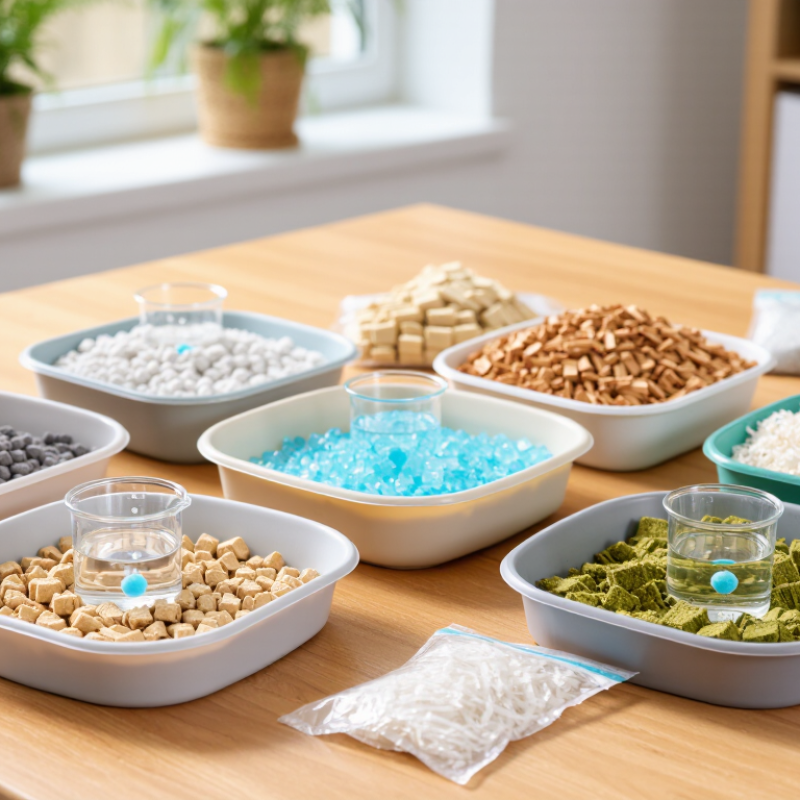
Mineral-based cat litter remains popular because it is widely available and easy to process. Clay litter offers a familiar texture and dependable moisture absorption. Its fine particles often feel soft under a cat’s paws. However, dusty grades may irritate sensitive cats and handlers. Buyers should request dust testing, particle-size data, and moisture results before placing large orders.
Bentonite is a swelling clay that forms firm clumps around urine. This feature can simplify daily cleaning and reduce unused litter. Sodium bentonite usually expands more than calcium bentonite, but performance varies by deposit and processing method.
Zeolite works differently. Its porous structure can help control ammonia odors, although it may not form strong clumps alone. Blended formulas can balance odor control, absorption, and cost. In practice, packaging quality also matters. Damp bags can weaken performance before the product reaches households.
Tips: Test samples in real homes, not only laboratories. Check dust near the litter box after pouring. Compare tracking on tile and fabric. Ask suppliers for mineral composition, particle size, moisture content, and safety documentation. Regional preferences also deserve attention. Some buyers prefer unscented litter, while others expect rapid clumping. I have found that no mineral performs perfectly in every market. A lower-cost option may create more waste, and a premium grade may not suit every cat. That trade-off should be measured honestly.
Plant-based cat litter offers global buyers a lighter, renewable alternative to mineral-based sand. Wood fiber usually provides a soft texture and a natural scent. It can absorb moisture well, but some types scatter around the tray. Corn litter often forms firm clumps and feels comfortable under sensitive paws. Its performance may change in humid regions.
Wheat litter can control everyday odors through natural starches. However, buyers should check dust levels and storage conditions. Grass fiber litter is typically lightweight and may have a fresh, mild smell. Its clumping strength varies between products. I once underestimated humidity during product testing. The litter absorbed moisture before use. Better packaging would have prevented that problem.
Tips: Compare absorption, dust, tracking, and clump strength before ordering large volumes. Ask suppliers for material details and independent safety information. A small trial helps reveal how the litter behaves in your climate. Do not assume every plant-based product is suitable for flushing. Local waste rules differ widely. Keep unused litter sealed and dry. Cats can reject sudden texture changes. Mix new litter gradually when possible. Regular tray cleaning still matters, even with strong odor control.
Silica gel cat litter is gaining attention among global buyers because it absorbs moisture quickly and helps control odor at the source. Its porous crystals trap urine, while solid waste remains visible for daily removal. Grand View Research’s 2024 cat litter market analysis identifies convenience and odor control as important demand drivers. These benefits explain silica gel’s appeal in apartments, export markets, and homes with limited ventilation.
The 2024 APPA National Pet Owners Survey estimates that about 46.5 million U.S. households own cats. That large user base makes safety and handling important purchasing factors. High-quality silica gel is generally made from amorphous silicon dioxide, not respirable crystalline silica. It should produce minimal dust when poured slowly. Still, “low dust” is not “dust-free.” Use a ventilated room, and observe cats that sneeze or avoid the tray.
Odor control depends on depth, mixing, and replacement timing. Stirring the crystals daily prevents wet spots from forming underneath. A tray that looks dry may still hold trapped moisture. This is easy to miss. Buyers should check safety data sheets, particle size, packaging seals, and disposal guidance for each market. Kittens or cats that chew litter need closer supervision, because swallowed crystals may cause digestive problems. Silica gel is practical, but not perfect; household behavior often determines performance more than the material alone.
Top Types of Cat Litter Sand for Global Buyers
Specialty cat litters are gaining attention as buyers examine dust, sourcing, and disposal. Grand View Research valued the global cat litter market at about USD 4.2 billion in 2023. Its 2024–2030 analysis also projects steady growth. Paper litter suits sensitive cats because recycled fibers usually create little dust. However, wet paper can become soft quickly. Owners may need more frequent changes.
Tofu litter uses compressed soybean residue and often forms firm, easy-to-scoop clumps. Its pale color makes urine changes easier to notice. Coconut litter is lightweight and can reduce shipping weight, but performance varies with fiber processing. Walnut litter provides useful odor control and a distinctive, earthy texture. Its darker particles can make health monitoring harder. Natural does not always mean better.
In practical product testing, I would check dust beside a dark bowl, then measure clump strength after ten minutes. Small details matter. The 2024 APPA pet ownership report shows cats remain common household companions in the United States, increasing demand for reliable daily-care products. Yet global buyers should not trust sustainability claims without supplier data. Ask for moisture content, material origin, dust testing, and packaging specifications. Disposal guidance also differs by country and municipality. A flushable claim may still create plumbing risks. I would compare odor control, tracking, price, and cat acceptance together. No material wins every home.
Global buyers compare cat litter by market conditions, not by product type alone. Bentonite clay remains attractive where strong clumping and low shelf prices matter. Silica gel suits humid markets because it absorbs moisture and reduces replacement frequency. Plant-based tofu, corn, and wood litters appeal to buyers seeking renewable materials. Recycled paper works well for low-dust positioning, especially in homes with sensitive cats.
The American Pet Products Association’s 2023–2024 National Pet Owners Survey recorded 49.6 million U.S. cat-owning households. This signals substantial demand, but purchasing habits vary sharply across regions. Grand View Research estimated the global cat litter market at about USD 5.34 billion in 2023, with continued growth through 2030. Buyers should compare dust levels, clump strength, odor control, tracking, packaging weight, and disposal guidance. Small details matter. A 10-kilogram bag may sell well in warehouse retail, yet perform poorly in apartment-focused cities with limited storage. In humid coastal areas, moisture-resistant packaging deserves testing before shipment. Local waste rules also influence plant-based claims and disposal expectations. My practical concern is simple: laboratory absorption results cannot fully predict a cat’s response at home. Some cats reject unfamiliar textures. Trial panels, transparent testing records, and feedback from shelters or households provide stronger evidence than marketing language. Mistakes still happen, especially when buyers judge only price per kilogram.
| Cat Litter Type | Main Material | Clumping Performance | Odor Control | Dust Level | Tracking Tendency | Environmental Profile | Disposal Considerations | Relative Cost | Common Market Fit |
|---|---|---|---|---|---|---|---|---|---|
| Bentonite Clay | Natural sodium or calcium bentonite clay | Strong, fast clumping, especially with sodium bentonite | Good to very good; depends on ventilation and formulation | Low to high, depending on processing and granule size | Medium to high | Mineral-based and non-renewable; not biodegradable | Place in general waste; do not flush | Low to medium | Broad mainstream demand in North America, Europe, Asia, Latin America and the Middle East |
| Silica Crystal | Porous amorphous silica gel crystals | Usually non-clumping; absorbs liquid within the crystals | Very good moisture and odor absorption | Generally low, although small particles may create dust | Low to medium | Not biodegradable; long service life can reduce replacement frequency | Place in general waste; do not flush | Medium to high | Urban households and buyers prioritizing low maintenance and odor control |
| Tofu or Soy-Pulp Pellets | Compressed soybean residue and plant fiber | Good clumping with relatively light, scoopable clumps | Good when kept dry and removed regularly | Usually low | Low to medium | Plant-based, renewable and generally biodegradable | Some products may be marketed as flushable, but local sewer and waste rules must be checked | Medium to high | Eco-conscious urban markets and consumers seeking lightweight products |
| Wood Pellets or Wood Fiber | Processed sawdust, softwood or hardwood fiber | Usually non-clumping; pellets break down when wet | Moderate, with a natural woody scent | Low when pelletized; dust may increase as pellets break down | Low to medium | Renewable and biodegradable when sourced responsibly | Dispose according to local organic-waste rules; avoid flushing large quantities | Low to medium | Markets with strong demand for renewable materials and low-dust litter |
| Paper Pellets | Recycled paper fibers or compressed paper pellets | Generally non-clumping; absorbs moisture in the paper structure | Moderate; unscented formulas are available | Very low | Low | Often made from recycled material and biodegradable | Dispose in general waste or approved composting streams; do not assume flushability | Medium | Veterinary, multi-cat and low-dust applications, including sensitive households |
| Corn or Cassava Granules | Starch-rich corn, cassava or other plant-based granules | Good clumping; clumps can soften if left in the tray | Good, with natural starch-based odor absorption | Low to medium | Medium | Renewable and generally biodegradable; may be affected by humidity | Follow municipal waste guidance; flushing is not universally suitable | Medium to high | Sustainability-focused markets and regions with growing plant-based product demand |
| Walnut Shell | Crushed walnut shells and natural plant material | Usually non-clumping or lightly clumping, depending on particle design | Moderate to good natural odor control | Low to medium | Medium | Renewable and biodegradable agricultural by-product | Dispose according to local waste guidance; do not flush unless specifically permitted | Medium to high | Niche eco-focused markets; avoid where household walnut allergies are a concern |
Note: Dust, tracking, odor control and clumping results vary with particle size, manufacturing quality, humidity, tray design and cleaning frequency. Disposal and flushability should always follow local regulations and wastewater guidance.