China Top 10 Coating Machine Manufacturers?
China’s Coating Machinery industry has become a critical link in packaging, electronics, battery, textile, and advanced film production. This article examines China’s top 10 Coating Machine manufacturers through practical selection criteria, not popularity alone. These criteria include coating accuracy, production speed, substrate compatibility, automation, after-sales support, and verified export experience.
Industry data explains the growing attention. Grand View Research identifies rising demand for industrial coating equipment, driven by automotive, electronics, and energy applications. The International Energy Agency also reports strong global growth in battery manufacturing capacity, creating greater demand for precision coating lines used in electrode production. China remains a major manufacturing center, according to United Nations Industrial Development Organization data, although manufacturing scale does not automatically prove machine quality.
A reliable comparison must look closer. A machine running inside a clean battery plant faces different requirements from one coating paper at high speed. Web tension, drying temperature, edge control, solvent handling, and coating thickness can determine whether a line produces saleable material or costly waste. Technical brochures often highlight maximum speed. They may not explain stable speed, maintenance intervals, or real customer results.
Therefore, this list should be read as a practical market guide, not an absolute ranking. Public information differs between manufacturers, and some performance claims require independent verification. Supplier audits, sample trials, factory visits, and reference checks remain essential. The selected companies are considered for engineering capability, product range, customization, certifications, and documented industry experience. Some firms may be stronger in narrow applications than in general-purpose equipment. That limitation deserves attention.
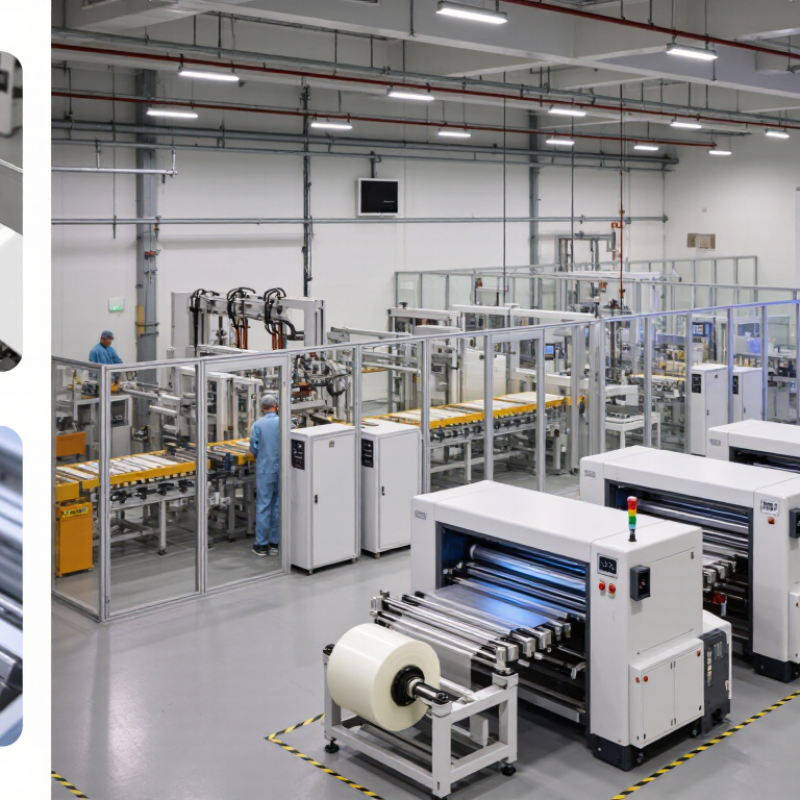
What Coating Machines Are and How They Work
Coating machines apply a controlled liquid layer to materials such as film, foil, paper, glass, or metal. Their purpose sounds simple, but stable coating requires careful coordination between chemistry and mechanics. The machine feeds the substrate at a measured speed. A coating head then spreads the liquid across its surface. Common methods include slot-die, roll, spray, dip, and curtain coating.
In a slot-die system, a pump pushes the liquid through a narrow opening. The moving substrate receives a wet film with a defined thickness. Roll coaters use rotating cylinders to transfer and meter the liquid. Spray systems create fine droplets, while dip coaters immerse the material and withdraw it at a controlled speed.
Drying zones remove solvents or water with heated air, infrared energy, or controlled airflow. Temperature must remain consistent. Excess heat can damage sensitive substrates.
Technicians monitor viscosity, web tension, pump pressure, coating speed, and drying conditions. Small changes can create streaks, bubbles, pinholes, or uneven edges. A practical inspection may use a thickness gauge, visual lighting, and sample testing after curing. I have found that a clean surface is often more important than a faster line. Still, production pressure encourages shortcuts. That deserves reflection. Machine selection should match the material, coating formula, required output, maintenance skills, and applicable safety standards. Reliable results come from repeatable settings, trained operators, and records that reveal problems before they spread.
Key Criteria for Ranking Chinese Coating Machine Manufacturers
China Top 10 Coating Machine Manufacturers?
Ranking Chinese coating machine manufacturers requires more than comparing production volume or website claims. MarketsandMarkets estimates the global coating equipment market will grow from about USD 19 billion in 2024 to nearly USD 25 billion by 2029. This growth raises buyer expectations. A credible ranking should examine coating uniformity, line speed, energy use, automation, and after-sales support. It should also verify factory capacity through audits, test runs, and customer references.
Performance needs measurable evidence. Buyers can compare thickness variation, material waste, drying temperature, and equipment uptime under identical conditions. For battery, film, paper, or metal applications, process stability matters more than impressive brochures. The International Energy Agency continues to identify industrial efficiency as a major route to lower energy demand. Therefore, electricity consumption per coated square meter deserves a clear position in any ranking. Shorter service response times matter, too.
Public data remains uneven. That is a weakness. Some manufacturers publish detailed test results, while others provide only broad promises. Ranking teams should request third-party calibration records, safety documentation, spare-parts data, and acceptance-test results. Independent laboratory verification adds authority. However, even audited data can miss real factory conditions. A sensible ranking should therefore combine technical evidence, operating experience, lifecycle cost, and transparent limitations, rather than reward the loudest marketing voice.
China’s Top 10 Coating Machine Manufacturers
China’s Top 10 Coating Machine Manufacturers are gaining attention as demand grows for batteries, flexible packaging, solar films, and functional surfaces. Grand View Research reports that the global coating equipment market is expanding steadily, supported by advanced materials and automated production. China remains important because it combines large manufacturing capacity with improving process control. A serious top-ten review should examine coating uniformity, web tension, drying efficiency, delivery time, and after-sales engineering, not only installed price.
In factory trials, slot-die, gravure, and curtain systems are judged by measurable details. These include coating thickness variation, line speed, solvent recovery, and defect rates. The International Energy Agency’s battery reports show continued expansion in global battery manufacturing, increasing pressure for stable electrode coating equipment. A reliable supplier should provide test data, sample runs, maintenance records, and clear limits for each machine. Stainless-steel contact parts also matter when materials are sensitive or abrasive.
The ranking is not perfectly simple. A smaller manufacturer may deliver better customization than a larger exporter. That sounds inconvenient. Smithers’ industry analysis also highlights the growing value of automation, inline inspection, and lower energy consumption. Buyers should therefore compare complete operating costs over five years, including drying energy, spare parts, training, and downtime. Some published performance figures need independent verification. Factory visits and witnessed acceptance tests remain essential, especially when a machine claims high-speed coating with extremely low thickness deviation.
Comparing Technologies, Applications, and Production Capabilities
China’s top 10 coating machine manufacturers should be compared by capability, not visibility alone. Their equipment may include slot-die, gravure, comma, reverse-roll, and spray coating systems. Each technology suits different materials and production goals. Slot-die coating supports accurate wet-film control for batteries, optical films, and medical materials. Gravure systems often deliver high-speed coating for packaging and decorative films. Comma and reverse-roll machines offer practical flexibility for adhesives, textiles, and industrial sheets.
Production capability matters as much as coating accuracy. Check working width, line speed, drying-zone design, tension control, and automation depth. A strong manufacturer should provide pilot testing, process validation, installation support, and documented quality controls. Ask for measurable data, such as coating-weight tolerance, thickness variation, and stable running time. Applications reveal real experience. A supplier serving only standard films may struggle with sensitive formulations or narrow process windows. Some comparisons also overlook after-sales response. That is a serious weakness.
Tips: Request test samples before purchasing. Compare results under identical material conditions. Inspect the factory, not only the showroom. Review maintenance records and spare-part availability. Ask how operators handle defects, edge beads, wrinkles, and uneven drying. Do not trust impressive speed figures without production evidence. A lower-speed line may deliver better yield. This point is often underestimated. Personally, I would also examine cleaning time and changeover design, because daily efficiency depends on small details.
How to Select the Right Chinese Coating Machine Manufacturer
Choosing the right Chinese coating machine manufacturer requires more than comparing prices. Application fit matters: web width, coating weight, viscosity range, drying method, line speed, and substrate sensitivity must match your process. A 2024 market assessment by Fortune Business Insights valued the global coating equipment market at about USD 19.4 billion in 2023, with continued growth expected through 2032. That growth increases supplier options, but it also makes technical screening harder.
Ask for verifiable production records, not polished brochures. Review factory videos, inspection reports, process drawings, and customer references in similar industries. Confirm material traceability, electrical documentation, spare-part availability, and response times. A supplier should explain how its machine controls tension, temperature, coating uniformity, and solvent or water-based drying. Factory acceptance testing is essential. Test your actual substrate and coating formula. A machine can look excellent on paper and still fail during continuous production.
Tips: Request a sample trial. Measure coating accuracy, energy use, changeover time, and cleaning effort. Check whether operators can access controls safely. Compare the written warranty with real service coverage. Ask for a detailed quotation, including installation and training. Do not choose the lowest bid automatically. I have seen technical assumptions hide later costs, and some specifications remain unclear until commissioning. That is an uncomfortable weakness in many purchasing plans. An independent engineer can review the final design before payment milestones begin.
How to Select the Right Chinese Coating Machine Manufacturer
The chart compares typical maximum web speeds for widely used coating technologies. Speed is only one selection factor; buyers should also verify coating uniformity, material compatibility, automation, after-sales support, spare-parts availability, and compliance with required production standards.