
China Best Theater Seating Manufacturer How to Choose?
Choosing a China-based Theater Seating Manufacturer is not just a price comparison. It is a test of fit, comfort, durability, and communication. Theater director Peter Brook wrote, “I can take any empty space and call it a bare stage.” His words are not about seating, but they point to a practical truth: the audience experience depends on how a space works. Even a beautiful auditorium can feel uncomfortable when seats are cramped or sightlines are blocked.
Start with the venue. Measure row spacing, aisle access, platform heights, and the usable width of each seat. Ask for drawings that match your floor plan, not just polished catalog images. Then request samples or visit a completed project. Sit in the seat for more than a minute. Check the armrest, lumbar support, upholstery seams, and how quietly the seat returns upright. Small details matter.
Look beyond the quotation. Ask about frame materials, foam specifications, upholstery options, production lead times, and quality checks. Request relevant test documents, and confirm that the proposed materials meet the requirements for your project and location. A responsive supplier should explain limitations, not only promise customization. That distinction can be easy to miss. I would not treat a low price or a confident sales presentation as proof of long-term value. Compare written specifications, clarify warranty terms, and agree on inspection steps before production. A checklist helps, but it cannot replace careful verification. Sit through a full performance if possible. That step is often overlooked.
Define Your Theater Seating Requirements and Project Scope
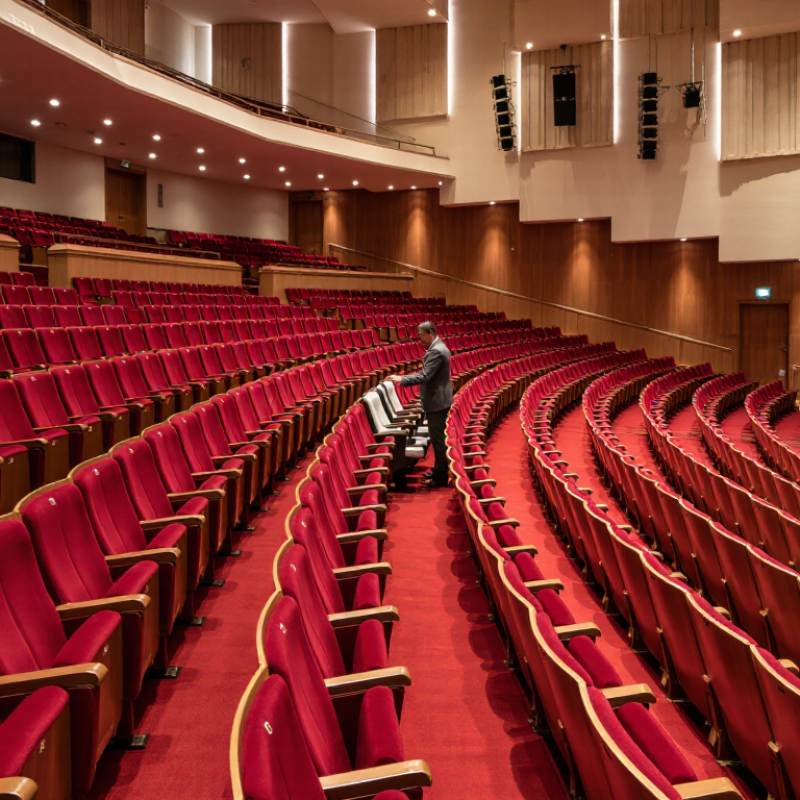
Before requesting quotes, translate the room’s purpose into measurable seating requirements. A school auditorium, community cinema, and lecture hall place different demands on the same chair. Record the usable floor area, row spacing, aisle widths, platform height, and expected audience size. Check sightlines from the back corners, not only from the center seats. Small details matter. A 30-centimeter change in row depth can affect circulation and total capacity.
Define the project scope beyond the seat itself. Decide whether you need fixed or removable rows, tablet arms, cup holders, power access, or specific upholstery and cleaning features. Include installation, delivery access, and the project schedule in your brief. Share accurate floor plans, then ask for a dimensioned seating layout that shows aisles and accessible spaces. Test real samples. Fabric can look different under stage lighting, and a comfortable chair in a showroom may feel cramped in a closely spaced row. In practice, an early layout is rarely final; site measurements and stakeholder feedback often reveal details the first plan missed.
China Best Theater Seating Manufacturer How to Choose? - Define Your Theater Seating Requirements and Project Scope
| Planning Dimension | Typical Considerations | Project Scope to Define | What to Confirm with the Supplier |
|---|---|---|---|
| Venue and use | Cinema, performing arts venue, lecture hall, auditorium, or multipurpose room. | State the venue type, expected audience, operating hours, and whether seating is fixed or frequently reconfigured. | Ask for seating models and configurations suited to the venue’s use, maintenance needs, and expected traffic. |
| Capacity and layout | Seat count depends on room dimensions, aisle locations, sightlines, accessibility, and local building requirements. | Provide dimensioned floor plans, row counts, aisle widths, platform or stage details, and target capacity. | Request layout drawings for review; have the project’s design team verify code compliance and clearances. |
| Seat dimensions | Seat width, center-to-center spacing, row pitch, armrests, and seat-back profile affect comfort and room capacity. | Set preferred dimensions and identify any wider, companion, or accessible seating locations. | Confirm dimensions on technical drawings and review a sample or mock-up where practical. |
| Accessibility | Accessible locations may require wheelchair spaces, companion seats, clear routes, and suitable sightlines. | Identify accessible seating locations and quantities in coordination with the applicable local regulations. | Check that proposed layouts and product details support the project’s accessibility design requirements. |
| Materials and finish | Upholstery, foam, metal finishes, wood or plastic components, color, and cleaning method affect appearance and upkeep. | Specify preferred materials, color references, cleaning expectations, and any project-specific fire or performance requirements. | Request material samples, technical data, care instructions, and documentation relevant to the project and destination market. |
| Seat functions | Options may include gravity or spring-assisted tip-up seats, cup holders, writing tablets, row lettering, and power or data accessories. | List required features by seating area and distinguish essential functions from optional upgrades. | Verify operating clearances, accessory compatibility, maintenance access, and any electrical coordination needs. |
| Durability and maintenance | Expected usage, cleaning frequency, replaceable components, and access to spare parts influence whole-life upkeep. | Describe daily use, cleaning routines, maintenance resources, and preferred warranty coverage. | Request written warranty terms, recommended maintenance procedures, and a list of replaceable parts. |
| Quantity and phasing | Final quantity should account for the approved layout, accessible positions, spare units, and any phased installation. | Set the initial order quantity, spare-seat allowance, delivery phases, and any future expansion requirements. | Confirm the bill of quantities, packing details, production schedule, and how later additions can match the original order. |
| Budget and delivery | Total project cost may include seating, accessories, samples, packing, freight, import charges, and installation. | Define the budget basis, delivery destination, required arrival date, installation responsibility, and quotation currency. | Ask for an itemized quotation, stated trade terms, estimated lead time, packaging information, and installation scope. |
| Approval and documentation | Project approval often involves drawings, samples, finish selections, technical documents, and a defined sign-off process. | Set review milestones, responsible approvers, required documents, and the date for final production approval. | Agree on drawing revisions, sample approval records, inspection arrangements, and the documents supplied with the order. |
Planning note: Final seating layouts, accessibility provisions, fire-performance requirements, and building-code compliance should be reviewed by the project’s qualified design professionals for the installation location.