Skip to content

China Top Red Light Therapy Pod Suppliers Guide

China has become an important sourcing market for wellness and aesthetic equipment. This guide examines reliable Red Light Therapy Pod suppliers across major manufacturing regions. It focuses on practical evidence, not impressive claims alone.

A dependable supplier should explain wavelength ranges, irradiance, treatment space, cooling design, and electrical requirements. Clear technical documents matter. So does consistent product testing. Buyers should request factory photographs, sample reports, warranty terms, and user manuals before making decisions. A supplier’s experience with international orders can reveal much about production control and after-sales support. Ask direct questions.

The best suppliers usually provide traceable quality procedures, responsive communication, and customization guidance. They should also discuss applicable safety standards and market-specific compliance responsibilities. Certification logos alone are not enough. Verify their scope and validity. Product demonstrations can help, but a polished showroom does not prove long-term performance. That assumption deserves caution.

This overview compares supplier capabilities, product configurations, lead times, and service quality. It also considers how manufacturers handle maintenance, replacement parts, packaging, and installation advice. These details often shape the real ownership experience. A pod may look modern under bright showroom lights, yet feel difficult to service months later. That possibility should remain visible.

No supplier is perfect. Pricing, quality, and delivery speed may conflict. Careful buyers should record these trade-offs instead of chasing the lowest quotation. With documented research and independent verification, businesses can make more informed sourcing decisions and select a Red Light Therapy Pod supplier suited to their operating needs. Some uncertainty will remain. Good evaluation acknowledges it.

China Top Red Light Therapy Pod Suppliers Guide

Red Light Therapy Pods Defined: 600–1,100 nm and 10–100 mW/cm²

China Top Red Light Therapy Pod Suppliers Guide

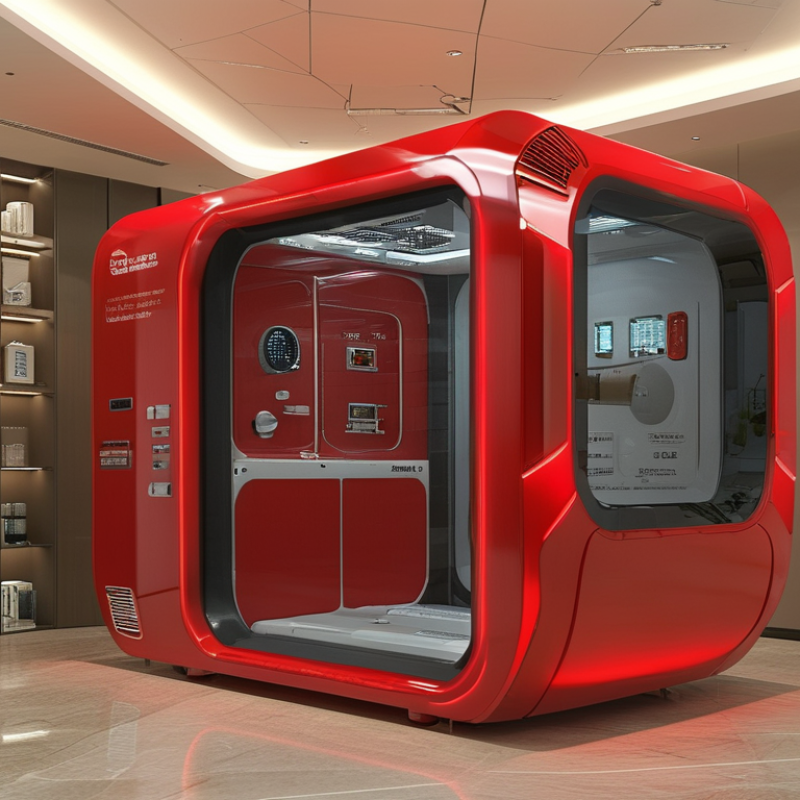
Red light therapy pods are enclosed systems designed to expose much of the body to selected light wavelengths. The practical range is commonly 600–1,100 nm, covering visible red light and near-infrared light. Irradiance usually falls between 10 and 100 mW/cm². These figures matter more than bright appearance. A stronger panel is not automatically better. Treatment time, distance, cooling, and pulse settings can change the delivered dose. In product evaluations, I would request independent measurements at the user’s actual standing position, not only laboratory results.

A reliable supplier should provide wavelength tolerance, irradiance maps, electrical safety documents, maintenance guidance, and clear user instructions. Ask whether measurements include every panel and whether heat was recorded during operation. Some specifications look precise but lack testing conditions. That is a weakness worth noting. Buyers should also examine door access, ventilation, emergency controls, cleaning surfaces, and operator training. Health claims must remain cautious, because results vary with condition, skin type, treatment schedule, and individual response.

Tips: Compare measured output at 30, 50, and 100 centimeters. Check whether 10–100 mW/cm² refers to adjustable output or separate models. Start with conservative sessions and follow professional guidance. Keep protective eyewear available when recommended. Record skin comfort, temperature, and session duration. Small details reveal quality.

Map China’s Supplier Landscape: OEM, ODM, and ISO 13485 Manufacturing

China’s red light therapy pod market spans OEM, ODM, and ISO 13485 manufacturing. Grand View Research estimates the global light therapy market will expand steadily through 2030, supported by wellness and clinical demand. The figure is useful, but it does not prove every supplier can build a reliable pod.

OEM suppliers usually follow fixed drawings, colors, and component lists. ODM factories offer deeper input, including LED layout, cooling systems, touchscreen controls, and user interfaces. During supplier reviews, buyers should inspect irradiance testing, thermal protection, electrical safety records, and calibration methods. Ask for batch samples, not only polished showroom units. Small details matter. Uneven light output can affect user experience and complicate validation.

ISO 13485 certification signals a quality management system designed for medical devices. It does not automatically validate a red light therapy pod or confirm clinical effectiveness. The International Organization for Standardization reports that ISO 13485 focuses on consistent processes, risk management, traceability, and corrective actions. A serious Chinese supplier should provide scope details, certificate validity, production records, and complaint-handling procedures. Intertek’s medical device industry research also emphasizes supplier controls and documented risk processes across the supply chain. The distinction is easy to miss. Some factories present certification without clearly covering the relevant site or product category. Buyers should verify certificates independently and compare prototype performance with mass-production samples. A lower quotation may reflect missing testing, weaker documentation, or unfinished engineering. That deserves honest reflection.

Evaluate Dosimetry: 4–60 J/cm² Fluence and Session-Time Accuracy

When evaluating China top red light therapy pod suppliers, treat dosimetry as a measurable specification, not a marketing phrase. A useful screening range is 4–60 J/cm² fluence. However, the correct dose depends on irradiance, wavelength, treatment area, and exposure time. The WALT photobiomodulation dosage recommendations show that therapeutic parameters vary by target tissue and application, so one universal setting is weak evidence.

Session time follows a simple equation: time equals fluence divided by irradiance. At 50 mW/cm², delivering 4 J/cm² requires about 80 seconds. Delivering 60 J/cm² requires 20 minutes. Small errors become significant. A five-minute session at 50 mW/cm² should provide 15 J/cm², not an unexplained “high dose.” Ask suppliers to report irradiance at the user’s skin plane, not only at the LEDs. Require calibrated meter records, wavelength tolerance, and uniformity results across the pod.

IEC 62471 provides a recognized framework for photobiological risk assessment, while IEC 60601-1 supports broader electrical safety evaluation for applicable medical equipment. These standards do not automatically prove treatment effectiveness. They improve technical confidence. I would also request independent testing using several measurement points, because center readings can look excellent while edge readings fall sharply. A polished report may still hide uncertainty. Suppliers should disclose instrument model, calibration date, sampling distance, and session-timer accuracy. That detail is less glamorous, but it reveals whether 4–60 J/cm² is genuinely delivered.

Red Light Therapy Pod Dosimetry Guide

Fluence is calculated as irradiance multiplied by exposure time. The reference session times below use a constant irradiance of 100 mW/cm² (0.1 W/cm²), so each additional 1 J/cm² requires 10 seconds of exposure.

Formula: Fluence (J/cm²) = Irradiance (W/cm²) × Time (s). Actual pod performance should be verified with a calibrated optical power meter because LED output, distance, treatment area, and device calibration can affect delivered dose and session-time accuracy.

Verify Compliance: IEC 60601-1, CE, RoHS, and FDA 510(k) Status

China Top Red Light Therapy Pod Suppliers Guide

Compliance should be verified before comparing prices or LED counts. IEC 60601-1 addresses basic safety and essential performance for medical electrical equipment. A supplier should provide the test report, certificate, and applicable edition clearly. A CE mark reflects conformity under European rules, not automatic clinical effectiveness. The European Commission’s Blue Guide warns that manufacturers remain responsible for technical documentation and declarations.

RoHS evidence should identify restricted substances, test methods, and product revisions. Do not accept a generic statement covering every model. FDA 510(k) status requires careful checking in the FDA’s public database. A listed clearance applies to a specific device, indications, and manufacturer. It does not automatically cover a similar pod or a factory’s entire product range. Industry market reports, including Grand View Research’s red light therapy analysis, project strong market growth through 2030. Growth also increases documentation risks. Bigger claims need stronger evidence.

Tips: Request the model number on every document. Match serial labels, electrical ratings, and wavelengths. Ask whether testing covered the complete pod, including controllers and cooling systems. Verify the legal manufacturer, importer, and intended market. A supplier may show CE paperwork, yet omit the EU declaration of conformity. That gap matters. FDA clearance can also be misunderstood. A database search is useful, but it is not a substitute for reviewing the intended-use statement and substantial-equivalence details. Consider an independent laboratory review when documents conflict. Some uncertainty is normal; unexamined uncertainty is not.

China Top Red Light Therapy Pod Suppliers Guide - Verify Compliance: IEC 60601-1, CE, RoHS, and FDA 510(k) Status

Compliance verification matrix for evaluating red light therapy pod suppliers without relying on company or brand names
Verification Dimension Applicability Evidence to Request from the Supplier How to Verify Interpretation for Buyer Due Diligence
IEC 60601-1 Basic Safety Typically relevant Current IEC 60601-1 test report, CB Test Certificate where available, model number, rated input, electrical diagrams, and applicable national deviations. Confirm that the tested model, electrical configuration, power supply, and accessories match the proposed production unit. Check the issuing laboratory or certification body and report date. IEC 60601-1 addresses basic safety and essential performance for medical electrical equipment. A test report is not, by itself, proof of CE marking, FDA clearance, or clinical effectiveness.
IEC 60601-1-2 EMC Typically relevant EMC test report covering emissions, immunity, electrostatic discharge, radiated fields, and electrical fast transients for the final configuration. Check whether the report identifies the same model and operating modes as the supplied pod. Review test standards and laboratory accreditation details. Electrical safety and electromagnetic compatibility are separate conformity areas. Passing IEC 60601-1 does not automatically demonstrate EMC compliance.
Risk Management Expected for medical devices ISO 14971 risk-management documentation, hazard analysis, risk-control summary, and evidence addressing overheating, optical exposure, electrical shock, fire, and mechanical hazards. Request a controlled summary rather than confidential design files. Confirm that identified risks correspond to the actual pod, firmware, sensors, and treatment accessories. A credible supplier should be able to explain residual risks, warnings, contraindications, maintenance requirements, and emergency shut-off controls.
CE Marking Depends on intended use EU Declaration of Conformity, applicable EU legislation, product classification rationale, technical documentation index, and notified-body certificate when required. Check the exact legal manufacturer, product model, intended purpose, applicable regulation, and validity of any notified-body certificate. Do not accept a generic “CE certificate” alone. CE marking is a manufacturer’s conformity declaration under applicable EU legislation. It is not a universal quality mark and does not automatically prove compliance with every EU requirement.
EU MDR Medical-Device Status If marketed for medical purpose in the EU Intended-purpose statement, classification rationale under Regulation (EU) 2017/745, clinical evaluation summary, post-market surveillance plan, and applicable conformity-assessment documents. Compare the marketing claims, instructions for use, labeling, and website statements with the declared intended purpose and classification. Claims to treat or alleviate a disease or medical condition may affect medical-device classification and conformity obligations. Wellness-only claims may follow a different regulatory pathway.
RoHS Compliance Relevant for EU electrical equipment EU RoHS Declaration of Conformity, restricted-substance test results, material declarations, supplier declarations, and technical documentation covering cables, PCBs, LEDs, plastics, and power supplies. Confirm the applicable RoHS version, product scope, documented exemptions, and whether testing covers the complete supplied configuration rather than only one component. RoHS restricts specified hazardous substances in electrical and electronic equipment. RoHS compliance is separate from medical-device safety and does not establish therapeutic performance.
FDA 510(k) Clearance Only when a U.S. device claim requires it FDA 510(k) number, clearance letter, cleared product code, indications for use, predicate-device information, and the exact trade or model names covered. Search the official FDA 510(k) database and compare the legal manufacturer, device name, product code, indications, and model configuration with the offered product. A valid 510(k) clearance applies to the cleared device and indications. A supplier’s FDA registration or device listing is not the same as FDA clearance.
FDA Establishment Registration and Listing Required for applicable U.S. activities FDA establishment registration details, device listing information, U.S. agent details where applicable, and confirmation of the responsible legal manufacturer. Verify records through FDA’s public databases and ensure that registration/listing information is current and linked to the correct product and legal entity. Registration and listing indicate that an establishment or device has been entered into FDA records; they do not mean that FDA has approved or cleared the product.
Optical Output and Photobiological Safety Important for light-emitting equipment Measured irradiance, wavelength range, treatment distance, exposure-time limits, uniformity data, LED/bin information, and IEC 62471 photobiological safety assessment where applicable. Require measurements from the final pod configuration at the user’s treatment distance. Check whether the reported values are measured or merely nominal LED specifications. “Red light” and “near-infrared” are broad descriptions. Safety and performance depend on wavelength, irradiance, exposure time, distance, coverage, and thermal conditions.
Thermal and User Protection Controls Expected for enclosed pods Temperature limits, over-temperature protection, ventilation design, emergency stop function, door-release mechanism, timer controls, fault alarms, and maintenance instructions. Review validation records and conduct a pre-shipment functional inspection using a production-equivalent unit. Controls should remain effective during foreseeable misuse, blocked ventilation, sensor failure, power interruption, and repeated treatment cycles.
Quality Management System Strongly recommended ISO 13485 certificate, scope of certification, manufacturing-site address, calibration records, incoming inspection procedures, traceability process, and change-control procedure. Confirm that the certificate covers the actual manufacturing site and relevant device activities. Review audit dates and certificate validity with the issuing body when possible. ISO 13485 supports controlled medical-device production but does not prove that a particular pod is safe, effective, CE-marked, or FDA-cleared.
Technical File and Change Control Essential for repeat orders Controlled bill of materials, approved drawings, software version, critical-component list, engineering-change-notification process, and re-testing policy after design changes. Include model-specific change-notification obligations in the purchase contract and require approval before changes to LEDs, power supplies, controllers, sensors, or enclosure materials. Compliance evidence can become invalid or less representative after undocumented changes. Traceability is especially important for private-label and OEM products.
Labeling and Instructions for Use Required for safe use English user manual, warnings, contraindications, eye-protection instructions, treatment parameters, cleaning guidance, service intervals, ratings label, and disposal information. Compare the manual and label with the tested configuration and intended market. Verify that claims do not exceed the applicable clearance or conformity documentation. Incomplete or overly promotional labeling is a warning sign. Safety instructions should be clear, model-specific, and consistent across packaging, manual, and online materials.
Supply-Chain and Pre-Shipment Inspection Recommended before payment Production sample, serial-number format, inspection checklist, electrical safety test records, optical-output report, packaging specification, and approved golden sample. Use an independent inspection or witnessed factory acceptance test. Record measured output, functions, accessories, labeling, and packaging against the purchase specification. Compliance documents should be tied to the exact production model and shipment. A document-only review cannot verify manufacturing consistency or actual output.
Important: “CE,” “RoHS,” IEC test reports, FDA registration, and FDA 510(k) clearance are different compliance concepts. Always verify the exact legal manufacturer, model number, intended use, technical configuration, document scope, and current validity before purchase or market entry.

Compare Suppliers Using MOQ, 2–5-Year Warranty, and Lead-Time Data

Selecting a red light therapy pod supplier requires more than checking unit price. MOQ, warranty length, and lead time reveal how prepared a supplier really is. A low MOQ can support a pilot order, especially for clinics testing customer demand. However, it may raise the per-unit cost. Ask whether the quoted MOQ includes one complete pod, spare parts, or mixed configurations. Confirm the warranty in writing. A two-year warranty may cover core electronics only, while a five-year offer may exclude lamps, fabric, or labor. Read the exclusions carefully.

Lead-time data should separate production, quality inspection, and shipping. A supplier promising 20 days may mean 20 factory days before dispatch. Request a dated production schedule and recent delivery records. I recommend ordering a sample before committing to volume. Check panel brightness, timer accuracy, ventilation noise, cable quality, and packaging damage. Small details matter. Ask for test reports, electrical certifications, and a clear replacement process. Payment milestones can also reduce risk. In my experience, supplier spreadsheets often look cleaner than factory reality. Build a buffer of two to four weeks for inspections and transport. Recheck every figure before signing.

Article Source:

Scroll To Top