China Top 10 Montessori Low Chair Suppliers?
Choosing a Montessori Low Chair involves more than comparing catalog photos. The right chair should let a child sit with feet supported and move it safely without adult help. Rounded edges, stable legs, smooth finishes, and a seat height matched to the child’s table all deserve close attention. Small details matter.
China has a wide range of furniture manufacturers and exporters, from workshops focused on wooden children’s furniture to larger factories serving international buyers. This guide explores ten suppliers worth researching, while recognizing that product ranges and production capabilities can change. A supplier’s location or polished website alone cannot confirm quality. Ask for current specifications, material details, production photos, and a sample before making a large order.
Look beyond the quoted unit price. Check chair dimensions, wood or panel materials, coating options, packaging, customization terms, and expected lead times. If possible, inspect how the chair stands on a hard floor and whether its edges feel smooth to the touch. Not every listing provides enough detail. That gap is worth questioning, not guessing around. Buyer reviews and certificates can help, but they should be checked against the specific product and factory. The comparisons ahead are intended as a practical starting point, not a fixed ranking or guarantee. Careful verification can help schools, retailers, and families find a dependable Montessori Low Chair supplier for their needs.
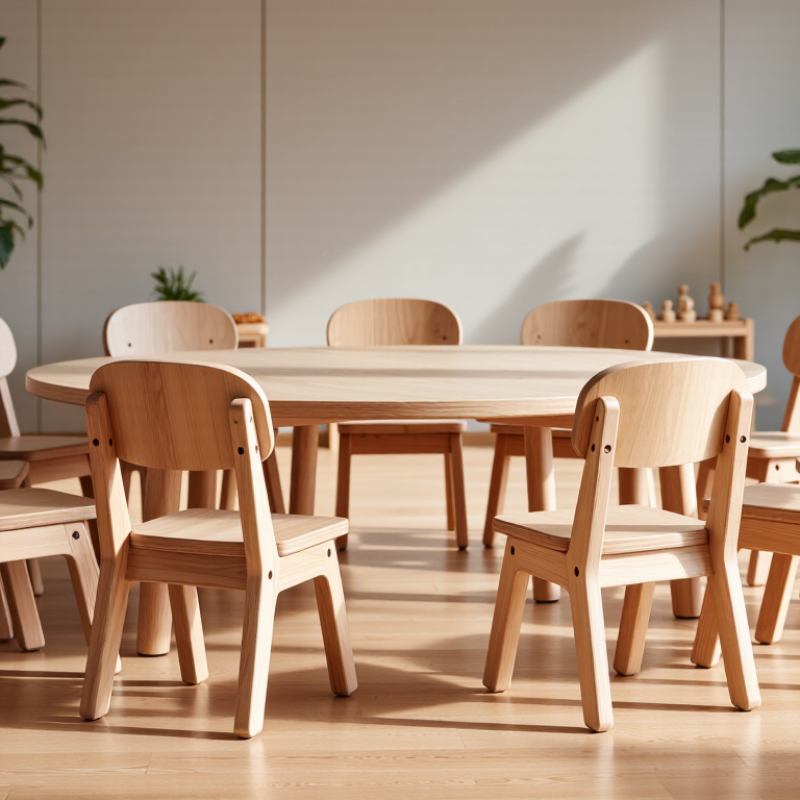
Defining Montessori Low Chairs by Child-Scale Design and Seat-Height Ranges
A Montessori low chair is defined by fit, not by a fashionable label. The child should sit with feet supported, knees comfortably bent, and the seat edge clear of the backs of the legs. CDC growth charts track children’s stature by age and sex, but they do not prescribe furniture dimensions. That matters: two children of the same age may need different seat heights. Measure the child’s popliteal height—from floor to the crease behind the knee—while wearing everyday shoes.
For initial comparison, roughly 6–8 inches (15–20 cm) may suit many toddlers, while 9–12 inches (23–30 cm) may fit some preschoolers. These are shopping ranges, not medical or standards-based cutoffs. A chair slightly below the child’s measured knee crease can help keep feet planted; check the fit in person when possible. Small details count. Watch for dangling feet, raised shoulders, or a seat so deep the child slouches.
ASTM F2613-22, the Standard Consumer Safety Specification for Children’s Chairs and Stools, addresses product safety; it does not create one universal Montessori seat-height chart. Suppliers should therefore provide seat height, seat depth, and intended age or size guidance. A tidy age chart can still mislead. Recheck fit as the child grows.
China Top 10 Montessori Low Chair Suppliers? - Defining Montessori Low Chairs by Child-Scale Design and Seat-Height Ranges
This table is a child-scale product specification guide, not a verified supplier ranking. The dimensions below are indicative design targets in centimetres, not claims about any particular supplier or a universal standard. Final fit should be checked against the child and the intended table height.
| Reference size | Seat height | Indicative seat depth | Indicative seat width | Child-scale fit check | Useful supplier specification to request |
| 1 | 18 cm | 20–22 cm | 24–27 cm | Child can sit with feet supported and knees comfortably bent. | Finished seat height and dimensional tolerance |
| 2 | 20 cm | 21–23 cm | 25–28 cm | Check that the seat does not press behind the knees. | Seat depth measured from front edge to backrest |
| 3 | 22 cm | 22–24 cm | 26–29 cm | Confirm the child can sit upright without sliding forward. | Seat dimensions and backrest angle |
| 4 | 24 cm | 23–25 cm | 27–30 cm | Pair with a table that allows relaxed shoulders and bent elbows. | Recommended table-height range |
| 5 | 26 cm | 24–26 cm | 28–31 cm | Check stable foot contact and an easy, independent sit-down. | Chair weight and stability information |
| 6 | 28 cm | 25–27 cm | 29–32 cm | Assess seat depth and width using the intended users, not age alone. | Load rating and stability test documentation |
| 7 | 30 cm | 26–28 cm | 30–33 cm | Ensure the chair suits the child’s proportions and workspace. | Material, finish, and cleaning instructions |
| 8 | 32 cm | 27–29 cm | 31–34 cm | Check for smooth edges and no pinch points around joints. | Edge treatment and inspection details |
| 9 | 34 cm | 28–30 cm | 32–35 cm | Confirm the chair remains stable during ordinary child movement. | Assembly method and replacement-part availability |
| 10 | 36 cm | 29–31 cm | 33–36 cm | Verify foot support and table compatibility before selecting this size. | Sample measurement report and production quality checks |
Fit note: A suitable chair generally lets the child sit back, keep feet supported, and bend the knees comfortably. Ask each supplier for measured samples, tolerances, safety documentation, and finish details before comparing products.
Mapping China’s Supplier Landscape: OEM, ODM, Export, and Factory Capabilities
China Top 10 Montessori Low Chair Suppliers?
Mapping China’s Supplier Landscape: OEM, ODM, Export, and Factory Capabilities
China’s supplier landscape includes specialist workshops, larger furniture factories, and export-focused trading companies. China National Furniture Association data put revenue from furniture manufacturers above designated size at about RMB 655.7 billion in 2023. General Administration of Customs figures also show furniture and parts exports at roughly RMB 403 billion that year. These figures indicate industrial scale, not Montessori expertise. A useful starting point. Ask suppliers whether they make children’s seating in-house, or outsource cutting, sanding, and finishing.
OEM suppliers typically build to supplied drawings and specifications. ODM suppliers may offer existing chair designs, adjustable dimensions, and finish choices. For low chairs, compare seat height, footprint, rounded edges, joint construction, and finish samples. Request inspection records and test reports for the exact model, not a similar product. Export capability matters too: confirm carton dimensions, labeling options, sample lead times, and experience preparing shipment documents. A clean sample is not proof of consistent production.
Factory visits or live video audits can reveal dust collection, sanding stations, and how parts move between work areas. Ask for production capacity by model and seasonal lead times. Small details matter. A chair may look sturdy, yet loose joints can appear after repeated use. Be cautious with broad “eco-friendly” or “child-safe” claims unless the supplier identifies the materials and provides supporting documentation. Public industry data cannot rank individual suppliers; buyers still need to verify factory claims, sample quality, and batch consistency.
Comparing 10 Suppliers by MOQ, Lead Time, Production Capacity, and Quality Controls
China’s Montessori low-chair suppliers vary widely in order minimums, delivery schedules, factory scale, and inspection routines. For a ten-supplier comparison, record each figure against the same chair design, wood type, finish, and packaging specification. Small workshops may accept 50–100 chairs per order, while larger factories may set minimums of 300 or more. Lower MOQs can help with trial orders. Unit costs may rise.
Ask suppliers to separate sample time from bulk-production time. A quoted lead time of 25–45 days is only useful when it states whether material sourcing, finishing, and packing are included. Request monthly output, current order load, and a realistic shipment window. Capacity on paper is not always spare capacity. That matters.
Quality controls deserve equal weight. Check whether the supplier inspects incoming timber, chair dimensions, joints, surface finish, and packed goods, and ask for sample inspection records. A stable process should include measurements for seat height and checks for rocking or sharp edges. Request photos or a live video walkthrough, then approve a production sample before placing a larger order. Compare all ten suppliers using the same checklist, and verify each detail in writing. Even careful comparisons have gaps; factory claims should be treated as unconfirmed until supported by current records.
Assessing Seating Safety with EN 17191:2021 and ISO 7173:2023
For a Montessori low chair, a low seat is not automatically a safe seat. EN 17191:2021 sets safety requirements and test methods for children’s seating, while ISO 7173:2023 measures chair and stool strength and durability. Together, they help buyers assess stability, structural performance, and whether a chair can withstand repeated use. Ask suppliers for test reports covering the exact model, materials, and configuration—not just a general certificate. A changed leg joint or seat thickness can affect performance.
WHO’s Global Status Report on Road Safety 2023 reports about 684,000 fatal falls worldwide each year. This figure covers falls broadly, not chair-related incidents, so it should not be used to claim that any particular chair prevents injuries. Still, it underlines why everyday stability deserves attention. Small details matter. Check that the feet sit evenly on a hard floor, the seat has no sharp edges, and the chair does not rock under a child’s shifting weight. Standards-based testing is useful, but it cannot reproduce every home or classroom. A pass is evidence, not a promise; supplier records and practical inspection both matter.
Checking Materials and Finishes Through Traceability and Emissions Documentation
When comparing suppliers of Montessori low chairs, ask how each wooden component can be traced. A useful record links the timber species, source or batch, production date, and finished chair. Paper trails matter. A packing label or invoice alone may not show where the wood came from. Request supporting chain-of-custody documents, and check that product names, batch codes, and dates match across records. If a supplier cannot connect a chair to its material batch, note that gap rather than assuming the paperwork is complete.
Finishes need the same scrutiny. Ask for the coating’s technical and safety documents, plus emissions test results for the relevant finish and product construction. Confirm the report identifies the tested sample, test date, and laboratory; a result for a different coating may not describe the chair you are buying. Look closely at edges, seat undersides, and leg joints, where coverage can vary. Ask whether production uses the same finish as the sample. It may not. Documents support a careful assessment, but they do not replace checking a physical chair or clarifying inconsistencies with the supplier.