What Is the Best Kids Stool to Buy in 2026?
Choosing the best Kids Stool in 2026 is not just a matter of color or price. A stool should fit the child, stay steady on the floor, and make everyday tasks easier. Think of a small bathroom sink, a kitchen counter, or a pair of shoes waiting by the door. The right design can help a child reach safely. The wrong one may wobble, slide, or feel awkward to climb.
Maria Montessori, physician and educator, is often credited with the advice, “Never help a child with a task at which he feels he can succeed.” It offers a useful perspective on children’s furniture, though she was not discussing stools specifically. A good Kids Stool should support independence without asking a child to manage more risk than they can handle. Small details matter: broad footing, non-slip surfaces, rounded edges, a suitable step height, and clear weight guidance. Materials should also be easy to wipe clean. Spilled juice happens.
This guide compares common stool types and the features worth checking before you buy. It considers stability, age and height fit, portability, storage, and everyday durability. Product claims can sound reassuring, but they do not replace checking dimensions and instructions. A stool that works beside one sink may be too tall for another. There is no perfect choice for every home, and reviews can miss that. Look for a model that suits your child’s routine, then reassess as they grow.
What a Kids Stool Is and How It Is Used
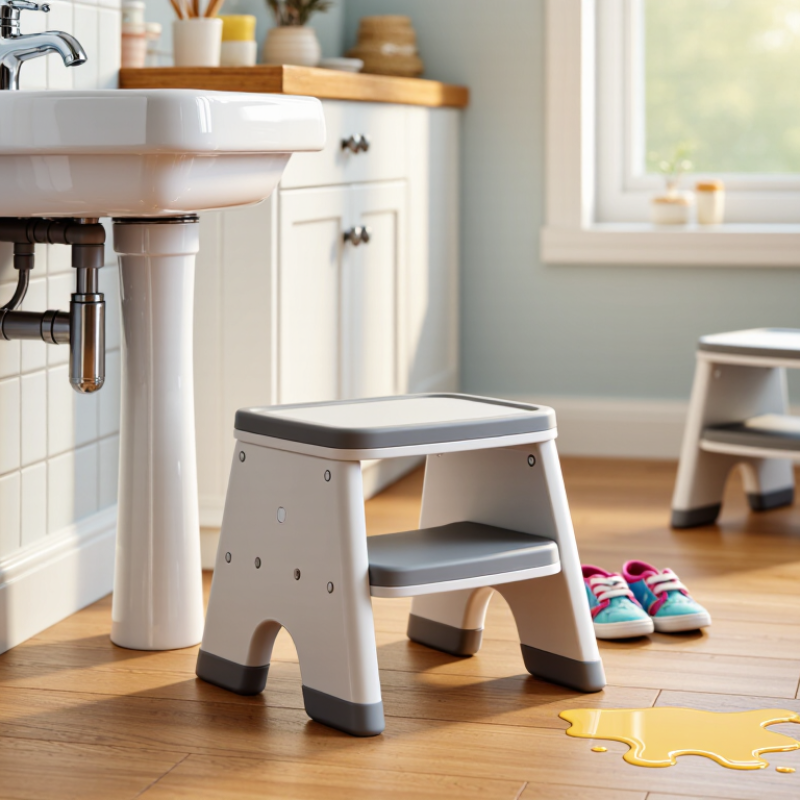
A kids stool is a small, stable platform that helps a child reach sinks, counters, or low shelves. Some models are designed for sitting; others are step stools, so check the intended use. At the bathroom sink, a child may stand on one to reach the tap, then step down before turning away. Small, steady steps matter.
Choose a height that lets the child reach without leaning far or climbing onto nearby furniture. Look for a broad, slip-resistant base, a textured standing surface, and a clearly stated weight limit. Keep the stool on a dry, level floor, and teach children to climb up and down rather than jump. Supervise young children, especially near water or hot surfaces. Even a well-made stool can slide on a wet tile floor.
Safety context is useful, but it needs careful interpretation. The National Safety Council’s Injury Facts reported 46,653 fall-related deaths in the United States in 2022, across all ages. That figure does not measure injuries caused by children’s stools; it simply underscores why stable footing and careful placement matter. A stool also cannot replace adult supervision. One practical drawback is easy to overlook: children may move it themselves, so a lightweight design is not always the safest choice.
Types of Kids Stools Available in 2026
Types of Kids Stools Available in 2026
Step stools help children reach sinks, counters, and coat hooks. Single-step models are compact, while two-step designs offer extra height but need a broad, steady base. For bathrooms, choose a stool with a textured top and feet that grip smooth tile. Small detail, big difference. A folding stool saves space, though its hinge and locking mechanism deserve regular checks.
Learning towers are enclosed platforms that bring a child closer to kitchen work surfaces. They take up more room than ordinary stools, but side rails can limit accidental slips. Adjustable stools suit growing children and changing tasks; check that the height locks firmly. For sitting at a desk, a child-sized stool should support a stable posture, not encourage leaning or tipping. The CDC’s 2000 growth charts track stature by age from 2 to 20, a useful reminder that children of the same age can need different seat heights.
When comparing options, look for clear age or weight guidance, a non-slip surface, and sturdy construction. ASTM F2613 covers safety requirements for children’s chairs and stools. The U.S. Consumer Product Safety Commission’s NEISS system estimates emergency-department-treated injuries from a sample of hospitals, but it does not rank every stool style. So a label alone is not proof of a good fit; test stability on the floor where the stool will actually be used. Sometimes the prettiest option wobbles a little. That matters.
Safety and Design Features to Compare
When comparing kids’ stools, look past bright colors and check stability first. A wide base, non-slip feet, and a low center of gravity can reduce wobbling on tile or polished wood. The World Health Organization’s 2021 Falls fact sheet estimates that 37.3 million falls each year are serious enough to require medical attention. That figure covers all ages, not stools specifically, but it underscores why a child’s step deserves careful scrutiny. Check the feet. They should grip firmly without leaving marks, and the stool should stay planted when a child steps near an edge.
Compare the stated weight limit, platform size, and handle placement. A broad, textured standing surface gives small shoes more room; smooth plastic can become slippery with wet socks. Rounded edges help avoid sharp contact, while sturdy handles should be easy for little hands to grasp. Look for clear age and use guidance, plus materials that are easy to wipe clean. Looks can mislead. A lightweight stool may be convenient to move, yet easier to shift during use. Before buying, press down on each corner and test it on the floor where it will actually be used. I would also reconsider any model that folds, rocks, or feels flimsy, even if its design is appealing.
How to Evaluate Materials, Size, and Stability
What Is the Best Kids Stool to Buy in 2026?
How to Evaluate Materials, Size, and Stability
A good kids stool should fit the child and the task, not just their age. The CDC’s growth charts track stature-for-age percentiles, a useful reminder that children of the same age can differ greatly in height. Check that the child can reach the intended surface without stretching, and that feet sit securely on the floor or step. For materials, look for smooth edges, sturdy joints, and a finish that wipes clean. The EPA’s TEAM studies reported indoor levels of about a dozen common organic pollutants at two to five times outdoor levels; this supports checking for low-emission finishes, though it does not guarantee any particular product is risk-free.
Stability deserves a hands-on check. Choose a broad base, non-slip feet, and a stool that stays steady on the floor where it will be used. Ask whether it was tested against ASTM F2613, the consumer-safety specification for children’s chairs and stools. A weight limit alone cannot tell you how it behaves when a child shifts sideways. I still find that detail easy to overlook.
Tips: Test it empty. Press each corner gently and check for rocking. Then supervise the child using it on a flat surface, and recheck screws and joints regularly.
How to Choose the Best Kids Stool for Your Child
Choosing a kids’ stool starts with fit, stability, and the task—not the age printed on a box. For a seat, check that your child’s feet rest flat on the floor. For a step stool, match its height to the sink or counter, and look for a wide, non-slip standing surface. Fit matters. A tall, narrow stool can encourage reaching or wobble on smooth tile. Check the weight limit, but don’t treat it as a safety guarantee; the base and joints matter too. Keep young children within arm’s reach when they use a stool, especially near counters or sinks.
The U.S. Consumer Product Safety Commission estimated 22,500 emergency-department-treated injuries from tip-overs involving TVs, furniture, and appliances in 2022. That figure does not single out stools, but it’s a useful reminder to prioritize stability. ASTM International’s F2613 standard covers safety requirements for children’s chairs and stools; ask whether a product has documented conformity. At home, try it on the actual floor where it will be used. Rugs can shift, and a stool that feels steady on a showroom surface may rock on tile. I wouldn’t choose by appearance alone. Inspect for loose parts, sharp edges, and worn grip surfaces as your child grows.
What Is the Best Kids Stool to Buy in 2026? - How to Choose the Best Kids Stool for Your Child
| Stool Type | Best For | Typical Height / Setup | Stability and Safety Checks | Main Trade-Off | What to Check Before Buying |
| Single-step stool | Reaching a sink, low shelf, or counter with an adult nearby. | One low platform; exact height and usable standing area vary by model. | Look for a broad, non-slip top, a steady base, and feet that grip the floor. | May not provide enough height for taller counters or sinks. | Measure the height needed and check the product’s stated age and weight limits. |
| Two-step stool | Reaching higher surfaces when a child can climb steps with supervision. | Two levels; offers a lower intermediate step and a higher standing surface. | Check that both steps have slip-resistant surfaces and the stool does not rock. | Takes up more floor space and requires a stable place to set it. | Compare the top-step height, footprint, and ease of moving or storing it. |
| Learning tower | Supervised participation at a kitchen counter or other work surface. | Raised platform inside a surrounding frame; some models offer adjustable platform levels. | Check for secure side rails, a stable base, secure assembly, and any child-entry opening or locking feature. | Bulkier than a basic stool and does not remove the need for close supervision. | Check counter fit, platform adjustment, footprint, assembly instructions, and stated limits. |
| Potty-training step stool | Helping a child reach a toilet seat or rest their feet while seated. | Usually low and compact; some designs fit around the toilet or fold for storage. | Look for a non-slip top and feet, a comfortable fit, and no sharp edges or pinch points. | A toilet-specific shape may be less useful for other household tasks. | Measure the bathroom space and check compatibility with the toilet and floor surface. |
| Folding stool | Occasional use or homes where storage space is limited. | Folds flat or collapses; platform height and setup differ by design. | Check that it locks open securely and cannot fold unexpectedly during use. | Moving parts need to be used as directed and kept clear of fingers. | Test the opening and locking mechanism, and follow the manufacturer’s instructions. |
Buying note: There is no single stool height, age range, or weight limit that applies to every product. Measure the surface your child needs to reach, review the specific product’s instructions and limits, and supervise children whenever they use a stool.