10 Best Bird Control Spikes for Wholesale Buyers
For wholesale buyers, Bird Control Spikes are not a one-size-fits-all product. A narrow ledge above a loading bay needs a different profile from a broad warehouse beam. Material, pin spacing, base flexibility, and UV resistance all affect installation and service life. Small details matter.
USDA APHIS Wildlife Services’ annual reports document ongoing efforts to manage human–wildlife conflicts, while the U.S. Environmental Protection Agency’s integrated pest management guidance emphasizes prevention and site-specific solutions. Neither provides a universal performance ranking for bird spikes. That matters: results depend on bird species, landing patterns, ledge width, weather exposure, and correct installation. Buyers should ask suppliers for material specifications, coverage per carton, installation guidance, and evidence behind any performance claims. Check the details.
Ornithologist Roger Tory Peterson is widely quoted as saying, “Birds are indicators of the environment. If they are in trouble, we know we’ll soon be in trouble.” That reminder supports a practical purchasing standard: deter access without treating every site or bird problem alike. This guide compares ten options for wholesale buyers, focusing on construction, application, purchasing considerations, and maintenance needs. A low unit price can look attractive, yet become costly when bases lift or coverage leaves gaps. No product eliminates the need for inspection. Choose for the site, not just the catalog photo.
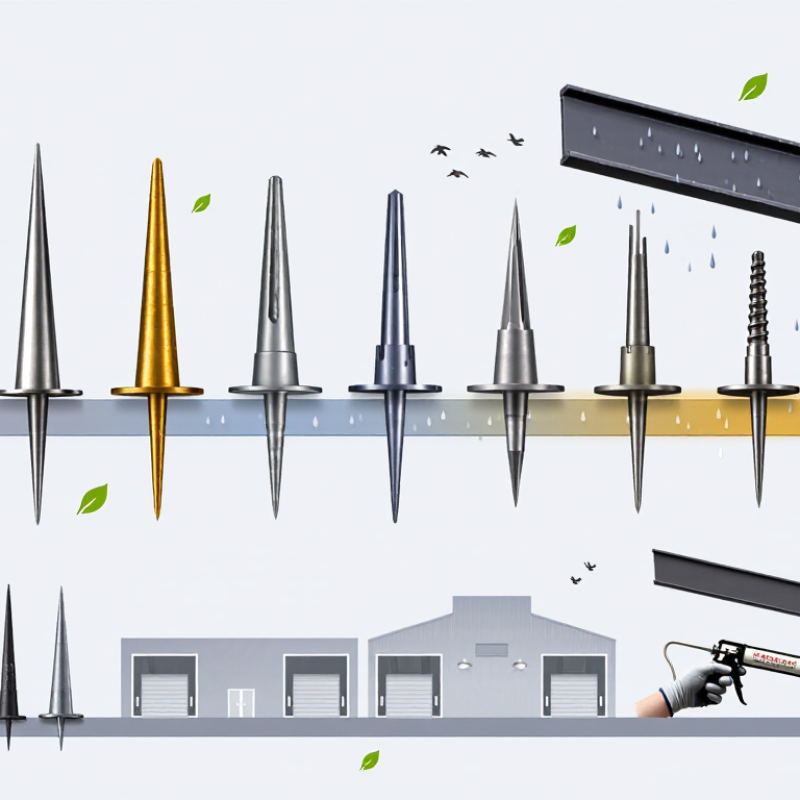
Define Target Species, Site Conditions, and Wholesale Use Cases
Wholesale buyers should define the bird species before comparing spike designs. Pigeons, gulls, and smaller perching birds differ in body size, landing behavior, and preferred roosting surfaces. A narrow ledge beneath a sign needs a different layout from a broad warehouse beam. The FAA’s 2023 Wildlife Strike Report recorded 19,603 reported wildlife strikes in U.S. civil aviation. Though airport data is not a measure of building infestations, it shows why documenting location and species matters.
Site conditions shape product choice. Measure ledge depth, note roof access, and check whether surfaces are dusty, wet, or exposed to strong wind. For wholesale orders, consider the end use: distributors may need mixed lengths, while facility contractors often need consistent sections and clear installation guidance. Stainless steel may suit exposed, corrosive settings; UV-resistant polymer can be easier to cut around irregular edges. Neither option fits every site. I have seen plans miss drain outlets and cleaning access—small omissions that create avoidable maintenance work.
Tips: Ask buyers for site photos, surface measurements, target species, and cleaning schedules. Keep a sample kit. It can reveal fit problems before a large order ships. Use the FAA report as a reference for careful wildlife documentation, not as proof that spikes will solve every bird issue.
Compare Stainless Steel, UV-Stable Polymer, and Polycarbonate Spike Systems
Material choice affects service life, freight costs, and installation time. Stainless steel spikes suit exposed ledges where buyers expect repeated cleaning and long-term use. Check the steel grade and finish; coastal salt can still cause corrosion, especially around cut edges. Small details matter. Compare spike height, base width, and fixing options against the ledge profile, not just the price per carton.
UV-stable polymer systems are lighter to ship and easier to trim around corners. Their flexibility can help on uneven surfaces, but performance depends on the formulation and actual sun exposure. Ask suppliers for weathering data and sample pieces before placing a large order.
Polycarbonate systems offer useful impact resistance and clear visibility, which may suit sites where appearance matters. Yet clarity alone does not confirm UV durability; confirm whether the material includes UV protection.
Not always.
For wholesale evaluation, test a few units outdoors, inspect the fixings, and check whether the packaging prevents bent bases. Even careful comparisons leave some uncertainty: local heat, dust, and cleaning routines can change how a system performs.
Assess Corrosion-Test Claims Against ASTM B117’s 5% Salt Spray at 35°C
For wholesale buyers, a corrosion claim is only useful when its test conditions are clear. ASTM B117 specifies a controlled salt-fog method: a 5% sodium chloride solution, a chamber temperature of 35°C, and defined fog collection and solution checks. It does not set a universal pass score for bird spikes. Nor does a stated number of test hours translate directly into years outdoors. Ask for the full report, including test duration, specimen preparation, coating thickness, and the failure criterion.
Details matter. A stainless steel spike and a coated steel base may corrode differently, especially where water collects around joints or cut edges. The 2016 NACE IMPACT study estimated global corrosion costs at US$2.5 trillion annually, or 3.4% of global GDP. That industry estimate is broad, not bird-spike-specific, but it underlines why vague corrosion claims deserve scrutiny. Request photographs of tested samples and notes on rust, blistering, or coating loss. Small flaws count.
I would not treat a long salt-spray result as proof of long service life. It is a comparative laboratory measure. Ask whether the tested construction matches the production item you will receive. Then consider the site: coastal air, frequent washing, and trapped debris can change performance. The paperwork may still leave gaps. That is worth acknowledging.
Rank 10 Designs by Coverage Width, Spike Spacing, and Linear Yield
For wholesale comparison, “linear yield” means usable installed length per carton, while coverage width measures the surface protected by each strip. Spike spacing affects deterrence and debris buildup. Designs vary by supplier, so verify dimensions, connector count, and carton footage before ordering. These rankings compare common layouts, not certified product specifications.
1. Wide three-row strips: broad coverage, close spacing, strong yield when cartons contain long sections. 2. Flexible wide-base strips: wide coverage on curved ledges, medium spacing, but more trimming waste. 3. Modular multi-row strips: broad coverage and close spacing; connectors can reduce usable length. 4. Standard three-row strips: balanced width, medium spacing, dependable carton yield. 5. Narrow two-row strips: moderate coverage and close spacing, useful for ledges with limited depth. Keep samples handy.
6. Long single-row strips: narrow coverage, open spacing, often high linear yield per carton. 7. Short modular strips: medium coverage, close spacing, but joints add installation time. 8. Angled-base strips: moderate coverage and spacing, suited to edges with changing profiles. 9. Low-profile strips: narrow coverage and tighter spacing; check whether the height suits the site. 10. Compact corner strips: very limited width, but useful for small gaps. A minor flaw in this ranking: installation layout can outweigh nominal width. Measure the ledge, then compare protected width and actual carton length.
Check Humane-Use Rules, Installation Needs, and Bulk-Packaging Terms
Wholesale buyers should assess bird control spikes as part of a site-specific deterrent plan, not as a one-size-fits-all product. Check local wildlife guidance and building requirements before ordering, especially for sites where nesting birds or protected species may be present. Compare tip shape, spacing, and flexibility. Favor designs intended to discourage landing without trapping or cutting birds. Small details matter. A sample can reveal sharp edges, weak joints, or awkward handling that catalog photos miss.
Installation conditions affect both performance and labor costs. Measure ledges, signs, beams, and roof edges, then note surface material and exposure to wind or rain. Confirm whether the base suits screws, adhesive, or another approved fixing method. Installers also need clear access and enough room to clean nearby drains. A poor fit is easy to overlook. It can leave gaps where birds still perch.
Before placing a bulk order, request carton dimensions, units per pack, and consistent product specifications across lots. Ask how spikes are protected from bending during shipment, and whether labels identify materials and intended use. Check lead times and replacement-part terms in writing. Packaging affects warehouse space and job-site handling. It is not glamorous, but it can change the true cost per installed meter. Schedules sometimes shift, so leave room for a small trial order before committing to a full shipment.
10 Best Bird Control Spikes for Wholesale Buyers: Buying Checklist
The bars count verification questions in this buyer checklist, not product ratings. Check humane-use rules for the installation location, confirm that the design and placement suit the target site, review surface preparation and attachment requirements, and verify section coverage and bulk-packaging details before ordering.