
Skip to content

2026 Top Luxury Faucet OEM Manufacturers Worldwide

The 2026 global luxury faucet market is shaped by design, engineering, and verified manufacturing capacity. Grand View Research estimates that the global faucets market was worth over USD 19 billion in 2023, with continued growth expected through 2030. Residential renovation, hospitality development, and premium bathroom design are supporting this momentum. Luxury buyers now examine more than appearance. They ask about cartridge durability, water efficiency, surface treatment, and after-sales support.

This guide evaluates each Luxury Faucet Oem Manufacturer through practical criteria. These include manufacturing experience, material traceability, quality-control systems, customization capability, and international compliance. The World Green Building Council continues to emphasize water conservation in sustainable building design. Therefore, flow-rate engineering matters alongside visual appeal. A solid brass body, ceramic disc cartridge, and consistent PVD coating can influence long-term performance. Small details matter.

Industry data also needs careful interpretation. Market reports often combine standard, premium, and commercial faucets. Their definitions of “luxury” are not identical. No ranking is perfectly objective. A beautiful showroom may hide inconsistent inspection procedures. Conversely, a less famous factory may deliver excellent private-label production. This article compares worldwide OEM manufacturers using available company information, product evidence, technical documentation, and buyer-oriented indicators. It also considers lead times, sampling quality, packaging protection, and communication during development. These factors become visible when a faucet arrives with scratched finishes or unclear installation instructions. The strongest suppliers do more than produce attractive fixtures. They provide repeatable quality, responsible sourcing, and dependable cooperation for brands entering the 2026 premium market.
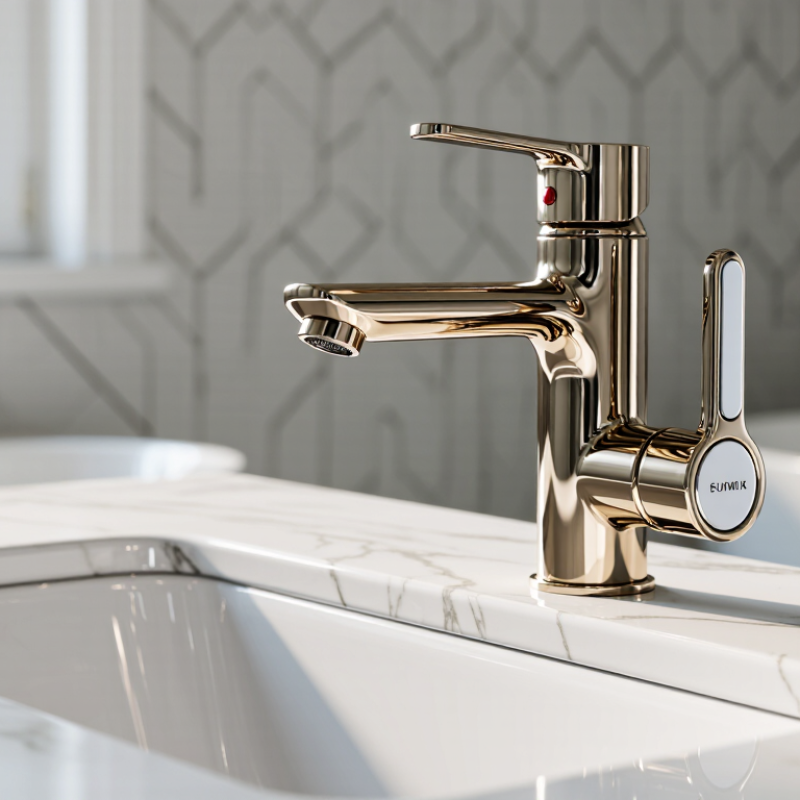
2026 Top Luxury Faucet OEM Manufacturers Worldwide

What Defines a Luxury Faucet OEM Manufacturer in 2026

What defines a luxury faucet OEM manufacturer in 2026? It is not merely polished metal, heavy packaging, or a high retail price. According to Fortune Business Insights, the global faucet market was valued at approximately USD 21.8 billion in 2023. This growth increases pressure on OEM factories to prove real value through engineering, consistency, and documented quality.

A capable manufacturer should control casting, machining, polishing, coating, cartridge assembly, and final inspection in one traceable system. ISO 9001 procedures help standardize these steps, but certificates alone are insufficient. Buyers should review batch records, salt-spray results, pressure tests, and cartridge cycle testing. EPA WaterSense specifications limit bathroom faucets to 1.5 gallons per minute, compared with older 2.2-gallon models. Luxury performance must therefore include smooth flow, stable temperature control, and responsible water use.

Material transparency also matters. Lead-free alloy options, compliant finishes, and market-specific testing support safer international distribution. ISO 14001 can indicate a structured environmental management process, yet it does not automatically prove low-impact production. That distinction is often overlooked. A factory may offer impressive samples but struggle with repeat orders, color matching, or replacement parts. Practical OEM evaluation should include pilot production, packaging checks, spare-cartridge planning, and direct factory communication. Small failures become expensive quickly. The best partners combine refined design with measurable reliability, honest limitations, and evidence that survives inspection.

2026 Top Luxury Faucet OEM Manufacturers Worldwide

What Defines a Luxury Faucet OEM Manufacturer in 2026?

This reference benchmark illustrates the relative importance of major OEM evaluation dimensions in the luxury faucet sector. Product quality, engineering reliability, regulatory compliance, finish durability, customization capability, water efficiency, and after-sales support are commonly assessed during international procurement. The percentages represent a structured procurement-weighting model, not company rankings or market-share data.

Global Regions Leading Luxury Faucet OEM Production

In 2026, luxury faucet OEM production is becoming more regional, specialized, and demanding. Western Europe remains influential for design-led manufacturing. Italy combines small-batch craftsmanship with advanced casting, polishing, and surface-finishing workshops. Germany is known for tight machining tolerances, cartridge testing, and disciplined process documentation. Portugal and Spain also support premium production, especially for architectural and hospitality projects. These factories often inspect samples at every finishing stage.

China remains a major OEM center because it offers deep supplier networks and flexible production volumes. Factories in Guangdong and Zhejiang can coordinate forging, CNC machining, plating, assembly, and packaging nearby. That proximity shortens development cycles. Experienced buyers still verify alloy composition, coating thickness, water-pressure performance, and factory labor practices. India, Turkey, and Southeast Asia are gaining attention for metalworking capacity and competitive customization. However, capacity alone does not prove luxury quality.

Reliable OEM selection depends on evidence, not showroom lighting. Ask for material reports, independent test records, and production samples from the actual line. Check thread accuracy, handle movement, drain fit, and finish consistency under harsh cleaning conditions. Some suppliers present excellent prototypes but struggle with repeat orders. Small details matter. Regional strengths overlap, and the map remains imperfect. Even strong factories can miss a detail when specifications change late. Clear drawings, approved samples, and staged inspections reduce that risk.

Key Capabilities of Top Luxury Faucet OEM Manufacturers

2026 Top Luxury Faucet OEM Manufacturers Worldwide

Top luxury faucet OEM manufacturers combine refined design with disciplined engineering. Their key capability is turning a concept into a reliable, production-ready fixture. Experienced teams review water pressure, cartridge life, mounting strength, and installation access before tooling begins. They also provide material traceability for brass, stainless steel, ceramic components, and surface finishes. A polished sample means little if internal testing is weak.

Strong manufacturers support flexible customization without losing process control. They can adjust spout height, handle resistance, finish texture, packaging, and technical drawings for different projects. Prototypes should be checked by engineers and installers, not only designers. Testing may include leak resistance, repeated operation, salt-spray exposure, and flow-rate verification. Documentation matters too, including inspection records and clear tolerance standards. Small details reveal capability.

Tips: Ask for test reports, factory inspection evidence, and a physical sample. Confirm lead times, replacement-part support, and quality checkpoints in writing. Visit the production site when possible. Photos can mislead. No supplier gets every detail right. Even capable teams may overlook an awkward installation angle or inconsistent finish under changing light. A useful OEM partner welcomes these questions, explains limitations, and improves the design before mass production.

2026 Comparison of Leading Luxury Faucet OEM Manufacturers

Choosing a luxury faucet OEM manufacturer requires more than comparing polished catalogs. In 2026, leading suppliers differ in design capability, production scale, testing depth, and customization speed. Some specialize in precision-machined brass bodies and hand-finished surfaces. Others perform better with large hotel projects and standardized collections. A reliable comparison should examine material certificates, cartridge durability, water-flow testing, and coating resistance.

Factory experience matters. Ask how prototypes are approved, how dimensional tolerances are controlled, and whether final inspections include pressure testing. A capable OEM partner can provide sample reports, component drawings, packaging details, and clear production timelines.

Visiting the facility, when possible, reveals practical facts: organized assembly lines, calibrated equipment, and traceable inspection records. Photos alone can mislead.

Tips: Request one functional sample before placing a large order. Test handle movement, spray stability, drainage, and surface consistency. Confirm replacement-part support in writing. Compare warranty terms carefully, not only unit prices. A lower quote may hide weaker plating or limited quality control. Still, even experienced buyers can misjudge a supplier after one successful sample. Repeated batch inspections offer stronger evidence. That takes time. But luxury performance depends on consistency, not presentation.

How to Select the Right Luxury Faucet OEM Partner

How to Select the Right Luxury Faucet OEM Partner

Luxury faucet sourcing requires more than polished samples. Grand View Research estimates the global faucets market will continue expanding through 2030, driven by design upgrades, renovation, and water-efficiency demand. This growth attracts capable factories and unprepared imitators. Select an OEM partner with documented production experience, not attractive photographs alone.

Request factory audit records, material declarations, and recent quality data. Verify brass composition, cartridge performance, coating thickness, and pressure-test procedures. Ask how defects are recorded and corrected. A useful partner should explain tolerances clearly. Vague answers are warning signs. ISO 9001 certification can support process consistency, but it does not replace independent inspection.

Water performance also matters. The U.S. Environmental Protection Agency’s WaterSense program identifies efficient plumbing products that meet strict performance criteria. Check whether the factory can design products for your target market’s flow-rate rules. Review tooling ownership, minimum order quantities, lead times, spare-part support, and packaging tests. Request pilot production before a large commitment. It costs more initially.

Do not judge reliability from one successful batch. That is a common mistake. Compare at least three production cycles, including a difficult finish or revised component. Grand View Research also identifies smart and touchless technologies as important growth areas, but electronics increase testing risks. Confirm moisture protection, software support, and replacement plans in writing. Some suppliers look excellent until the first engineering change. That moment reveals the real partner.

2026 Top Luxury Faucet OEM Manufacturers Worldwide - How to Select the Right Luxury Faucet OEM Partner

Global Luxury Faucet OEM Partner Evaluation Scorecard

Evaluation Dimension Key Data Metric Recommended 2026 Benchmark Verification Method Weight Why It Matters
Regulatory Compliance Applicable plumbing and drinking-water standards Product documentation should identify the standards required by the target market, such as ASME A112.18.1/CSA B125.1, EN 817, EN 1111, or NSF/ANSI/CAN 61 where applicable. Review current certificates, scope, test reports, declaration documents, and model numbers covered by each certificate. 20% Reduces import, installation, safety, and market-access risks.
Quality Management Manufacturing quality system and process control A documented ISO 9001-based quality system, incoming inspection, in-process inspection, final inspection, nonconformity control, and corrective-action records. Audit the quality manual, inspection plans, calibration records, production records, and recent corrective-action reports. 15% Creates repeatable quality across production batches and private-label programs.
Materials and Water Contact Safety Material traceability and composition control Full material declarations for brass, stainless steel, polymers, rubber components, cartridges, and coatings; lead and other restricted substances must meet the destination-market limits. Request material certificates, supplier declarations, restricted-substance testing, and batch traceability records. 15% Protects potable-water safety, durability, and regulatory acceptance.
Surface Finish Quality Finish uniformity, adhesion, corrosion, and abrasion resistance Finish testing should be defined by the selected finish and target market; use neutral-salt-spray, adhesion, abrasion, chemical-resistance, and color-consistency testing where applicable. Review laboratory reports, approved color panels, coating-process controls, and retained samples from mass production. 10% Luxury products depend heavily on visual consistency and long-term appearance.
Product Engineering Design validation and functional life testing Documented testing for pressure, leakage, flow performance, temperature control, cartridge durability, hose performance, and installation tolerance. Check engineering drawings, bill of materials, failure-mode analysis, validation plans, and test results for the exact product configuration. 10% Confirms that the design can perform reliably outside the prototype stage.
OEM Customization Capability Ability to customize geometry, finish, packaging, and components Capability to support custom CAD development, tooling, logo placement, finish matching, packaging specifications, spare parts, and installation instructions. Request a customization matrix, sample-development schedule, tooling quotation, and approval workflow. 8% Determines whether the supplier can support a distinctive luxury collection.
Production Capacity Available monthly capacity and capacity reservation Capacity should be demonstrated by process stage, including machining, polishing, plating or coating, assembly, testing, and packaging; capacity must be supported by production records. Review production plans, equipment lists, staffing levels, utilization data, and capacity-allocation procedures. 8% Helps prevent shortages when a successful product enters multiple markets.
Lead-Time Reliability Sample, tooling, and mass-production delivery performance Require a written critical-path schedule with approval gates for samples, tooling, pilot production, inspection, and shipment; measure on-time delivery rather than quoted lead time alone. Compare historical purchase-order dates with actual shipment dates and review production-delay root-cause reports. 5% Supports launch planning, project scheduling, and inventory control.
Minimum Order Quantity MOQ by model, finish, component, and packaging configuration MOQ should be stated separately for standard models, custom finishes, custom tooling, customized packaging, and replacement parts. Obtain a signed quotation showing MOQ, price breaks, setup fees, tooling ownership, and conditions for mixed-model orders. 3% Determines whether the OEM is suitable for market testing and phased collection launches.
Testing and Inspection Transparency Independent testing, lot inspection, and traceability Each production lot should have defined inspection criteria for dimensions, leakage, flow, appearance, operation, packaging, and labeling. Review inspection checklists, sampling plans, test-equipment calibration, third-party reports, and lot release records. 3% Provides objective evidence that shipped goods match approved samples.
Environmental Management Energy, water, chemical, and waste controls Prefer an ISO 14001-based environmental management system or equivalent documented controls for wastewater, plating chemicals, hazardous substances, packaging, and waste disposal. Review environmental permits, wastewater records, chemical inventories, waste-transfer documents, and environmental-audit results. 2% Supports responsible sourcing and retailer sustainability requirements.
After-Sales Support Warranty, spare parts, claims, and technical response A written warranty policy, spare-parts list, installation guidance, claims procedure, service-response target, and long-term replacement-part plan. Review warranty terms, spare-parts pricing, service records, response-time data, and escalation contacts. 1% Protects customer satisfaction and reduces lifecycle service costs.
Total Recommended Evaluation Weight 100% Use a 1–5 score for each dimension and multiply by the assigned weight.

Scoring guidance: 5 = fully verified and exceeds the benchmark; 4 = meets the benchmark; 3 = partially verified; 2 = material gaps; 1 = unacceptable or undocumented. Regulatory requirements vary by destination market, product type, water-contact application, and installation configuration. Always confirm the latest requirements with the relevant authority, certification body, or importer before placing a production order.

Scroll To Top