Skip to content

2026 Best Produce Clamshells for Global Buyers

For global buyers, the best Produce Clamshells are not chosen by appearance alone. They must protect berries, tomatoes, mushrooms, and leafy produce through packing, cooling, transport, and retail display. A clear lid may attract attention, but ventilation, seal strength, moisture control, and stacking performance decide whether the product arrives in saleable condition.

Paul Singh, a respected food packaging and processing expert, has stated, “Packaging must protect food quality from harvest to handling.” That principle remains practical in 2026. Buyers should compare PET, rPET, and fiber-based options against product sensitivity, machinery compatibility, and regional recycling systems. A lightweight container can reduce freight costs. It can also crack under pressure if the design is too thin. That trade-off deserves testing.

This guide examines the 2026 best Produce Clamshells for international sourcing teams. It considers clarity, anti-fog performance, tamper resistance, vent placement, closure consistency, pallet efficiency, and supplier documentation. Food-contact compliance and traceability matter across markets. So do production capacity and lead-time stability.

No ranking can fit every supply chain. A berry exporter may need micro-vents and strong corner protection. A retailer selling cherry tomatoes may value visibility and rapid shelf presentation. Even experienced buyers can overlook condensation during trial shipments. That is where real samples, cold-chain simulations, and drop tests become essential. The strongest choice is rarely the cheapest unit. It is the container that protects quality while controlling total delivered cost.

2026 Best Produce Clamshells for Global Buyers

What Are Produce Clamshells and How Do They Work?

2026 Best Produce Clamshells for Global Buyers

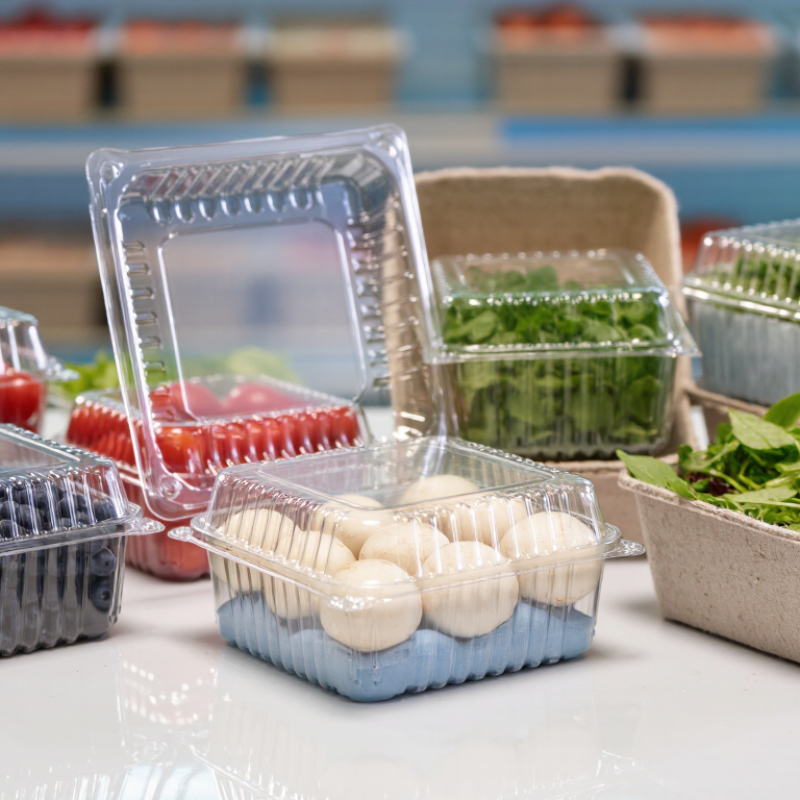
Produce clamshells are rigid, hinged containers designed to protect fresh fruits and vegetables. They commonly hold berries, grapes, cherry tomatoes, and delicate herbs. The clear structure lets buyers inspect color, size, and visible damage without opening the pack. Visibility matters. A secure hinge also reduces accidental opening during transport and retail handling.

Small ventilation holes support air movement around the produce. This can help release heat and reduce excess condensation after cooling. However, vents cannot replace proper temperature control or careful harvesting. Moisture still collects when warm produce enters a cold supply chain. Tiny vents help, but they are not a complete solution.

A well-designed clamshell balances protection, airflow, weight, and stacking strength. Its base should support the produce without crushing lower layers. The lid should close consistently and remain secure during loading. In packing operations, even a slightly weak hinge can create waste. Material choice also requires careful review. Recycled content may reduce material demand, but local recycling systems differ widely. Buyers should check resin identification, labeling space, seal quality, and compatibility with automated packing equipment. A clear package looks simple, yet its performance depends on cooling, handling, storage, and distribution working together.

Key Materials and Designs Used in Produce Clamshell Packaging

For global produce buyers, clamshell performance starts with the material.

PET remains widely used because it is clear, rigid, lightweight, and suitable for many food-contact applications. Recycled PET can reduce virgin plastic demand, but its availability and approved content vary by market. PP offers stronger heat resistance, while paper-based formats need moisture protection and careful coating choices. PLA looks attractive, yet industrial composting access remains limited.

Design details protect both quality and logistics. Vent holes help release condensation around berries and leafy produce. Anti-fog surfaces keep grapes, tomatoes, and cut fruit visible under chilled storage. A hinged lid with a secure closure reduces crushing during stacking.

According to the UNEP Food Waste Index Report 2024, 1.05 billion tonnes of food were wasted in 2022. Packaging cannot solve waste alone, but poor ventilation can accelerate it.

The U.S. EPA reported 82.2 million tons of containers and packaging generated in 2018. This figure makes material reduction more than a marketing preference. It is a purchasing concern.

Buyers should request resin identification, recycled-content documentation, food-contact compliance, and local recovery guidance. I would not specify compostable plastic automatically. The right option depends on collection systems, humidity, shelf life, and pack-house equipment. A lighter clamshell can fail if its lid buckles, so laboratory tests and real transport trials still matter.

How to Compare Clamshells for Different Fresh Produce

For global buyers, comparing clamshells starts with the produce, not the package catalog. Soft berries need shallow containers with smooth edges and strong ventilation. Cut fruit needs tighter closure control and visible tamper evidence. FAO reports that 13.2% of food is lost between harvest and retail, based on 2023 estimates. A well-designed clamshell cannot solve every loss, but it can reduce crushing, moisture buildup, and rough handling.

Check five practical details: material clarity, hinge strength, vent area, stacking stability, and recycled-content documentation. A strawberry clamshell should let buyers inspect color without opening the lid. Too many vents may cause dehydration. Too few may leave condensation on the fruit. The right balance changes with crop, route length, and cold-chain performance. It is a small package with a difficult job.

Run a real transport trial. Pack chilled produce, stack it, and move it through vibration, temperature changes, and unloading delays. Measure bruising, condensation, closure failure, and usable shelf life. UNEP’s Food Waste Index Report 2024 estimated 1.05 billion tonnes of food waste in 2022, although packaging is only one factor. Buyers should also review food-contact compliance, migration testing, pallet efficiency, and end-of-life options in each market. Recyclability claims can be unclear. Ask for evidence, not attractive wording. A clamshell that looks sustainable may still perform poorly if it traps water or requires excessive packaging.

Global Compliance and Sustainability Requirements for Buyers

For global buyers, produce clamshells must satisfy food-contact rules before appearance or price. Ask suppliers for declarations of compliance, migration test reports, and traceability records. Requirements differ across markets, so one certificate rarely fits every destination. Confirm resin type, additives, inks, and adhesives before approving a shipment.

Small details matter. A secure hinge should survive repeated opening during retail handling. Vent holes must release moisture without exposing berries to unnecessary drying. Clear material helps inspectors check bruising, mold, and foreign particles quickly. For chilled produce, test seals after temperature changes, not only at room temperature. Cold chain failures reveal weak packaging.

Sustainability claims require evidence. Request recycled-content percentages, chain-of-custody documents, and realistic recycling instructions. “Compostable” does not mean compostable everywhere. Local facilities, labeling rules, and collection systems decide the real outcome. Lightweighting can reduce material use, but thinner walls may increase cracking and product loss. I have seen buyers focus on grams saved, then overlook damaged fruit. That is an expensive contradiction.

Supplier audits should review factory hygiene, worker safety, batch controls, and corrective actions. Keep samples from every approved production run. Photograph cartons, closures, and labels during inspection. A practical scorecard should compare compliance risk, shelf protection, recovery options, and total delivered cost. Perfect packaging does not exist. A careful buyer keeps testing.

2026 Best Produce Clamshells for Global Buyers — Global Compliance and Sustainability Requirements

EU packaging recycling targets provide a useful compliance benchmark for produce clamshell buyers. Plastic packaging, including many PET and PP clamshells, must achieve at least 50% recycling by 2025 and 55% by 2030. Targets are material-based and should be checked against the regulations of the destination market.

Source: European Union packaging recycling targets under Directive 94/62/EC. Buyers should also verify food-contact safety, recyclability design, labeling, recycled-content rules, and extended producer responsibility requirements in each target market.

How to Select the Best Produce Clamshell Supplier in 2026

Choosing a produce clamshell supplier in 2026 requires more than comparing unit prices. Start with product fit. Confirm resin type, wall thickness, ventilation, hinge strength, and closure performance. A berry pack may need different airflow than a tomato container. Ask for samples filled with real produce, not empty displays.

Test them in cold storage and during transport. Check fogging, cracking, stacking stability, and label adhesion. Small failures become expensive at distribution centers. Request food-contact compliance documents, batch traceability, and recent quality records. A reliable supplier should explain how defects are measured and handled.

Production capability matters. Review tooling capacity, minimum order quantities, lead times, and backup plans for seasonal demand. Ask whether the supplier can maintain color, dimensions, and recycled-content ratios across batches. Communication is another practical test. Do they answer technical questions clearly?

Look for evidence.

Factory audits, inspection reports, and material declarations provide stronger proof than polished sales language. Sustainability claims also need verification. Recycled content can affect clarity, strength, and pricing, so test the actual grade you will purchase. I have seen buyers approve a sample too quickly, then discover the hinge weakens after repeated handling. That mistake is avoidable, but not always obvious. Supplier selection should leave room for trial orders, corrective feedback, and one uncomfortable question: what happens when the first shipment is not perfect?

2026 Best Produce Clamshells for Global Buyers - How to Select the Best Produce Clamshell Supplier in 2026
Selection Dimension Key Metric Practical 2026 Benchmark Why It Matters for Produce Supplier Verification Checklist Priority
Material Primary packaging resin Food-grade PET, rPET, PP, or certified compostable alternatives, depending on the product and destination market Material choice affects clarity, stiffness, impact resistance, recyclability, and regulatory compliance. Request resin specifications, food-contact declarations, recycled-content documentation, and migration-test records. High
Recycled Content Post-consumer recycled content Common commercial ranges are approximately 30%–100% rPET where local regulations, food-contact approvals, and supply availability permit Higher recycled content can reduce virgin plastic use, but may influence clarity, color, odor, and price. Confirm the percentage by mass, chain-of-custody records, batch consistency, and food-contact suitability. High
Capacity Net produce fill volume Typical retail formats range from approximately 125 g to 1,000 g, with smaller formats used for berries and larger formats for grapes or prepared produce Correct capacity minimizes product compression, empty headspace, and retail handling losses. Run fill tests with the actual crop, variety, size distribution, and pack-out method. High
Ventilation Vent-hole design and open area Ventilation should be designed by crop; many berry formats use multiple small vents distributed across the lid and base rather than one large opening Ventilation helps manage condensation and heat, while excessive openings can increase dehydration and contamination risk. Request airflow or shelf-life test data under the intended temperature and humidity conditions. High
Closure Hinge, snap-fit, or tamper-evident closure The closure should remain secure during stacking, transport, vibration, and normal retail handling without damaging the produce A reliable closure reduces leakage, tampering, accidental opening, and product loss. Check opening force, reclosure performance, tamper evidence, hinge durability, and compatibility with automated packing lines. High
Dimensions Length, width, height, and stackability Dimensions should match the buyer’s trays, cartons, pallets, retail shelves, and automatic filling equipment Standardized outer dimensions improve cube utilization and reduce transportation and storage costs. Obtain a dimensioned drawing, stacking pattern, pallet configuration, and sample cartons before approval. High
Wall Performance Stiffness and compression resistance The pack should resist deformation during the planned stacking height, transit duration, and temperature range Weak walls can cause crushing, lid separation, label damage, and reduced shelf appeal. Review compression, drop, vibration, and stacking tests using filled packs at chilled and ambient conditions. High
Product Visibility Clarity and surface quality High optical clarity is generally preferred for berries, cherries, grapes, tomatoes, and premium fresh-cut produce Clear packaging helps buyers assess freshness, color, size, and visible defects without opening the pack. Evaluate haze, scratches, flow lines, color consistency, and clarity after refrigeration and condensation exposure. Medium
Food Safety Hygiene and quality-management controls The facility should operate a documented food-safety system such as HACCP-based controls and a recognized certification appropriate to the supply chain Packaging directly contacts food and must be produced under controlled hygiene and traceability procedures. Request current audit certificates, allergen and contamination controls, pest-control records, traceability procedures, and recall plans. High
Regulatory Compliance Destination-market food-contact compliance Documentation should match the import market, including applicable requirements in the European Union, United States, United Kingdom, or other destination regions Compliance gaps can delay customs clearance, retailer approval, or product launch. Ask for declarations of compliance, test reports, substance restrictions, and current regulatory-change monitoring. High
Shelf Life Performance under the cold chain Testing should cover the actual storage range, commonly refrigerated conditions around 0–5°C for many fresh produce categories, where applicable Temperature, humidity, condensation, and gas exchange affect firmness, mold growth, dehydration, and appearance. Compare shelf-life results using real produce and the intended film, label, carton, pallet, and transport conditions. High
Printing and Labeling Label area and print compatibility The container should provide a stable label panel and support barcode, lot code, country-of-origin, weight, and recycling information requirements Reliable labeling supports traceability, inventory control, consumer information, and retailer scanning. Test label adhesion, condensation resistance, barcode readability, ink compatibility, and variable-data printing. Medium
Recyclability Material simplicity and local acceptance Mono-material PET or PP formats are generally easier to sort than packs combining incompatible polymers, foams, metalized layers, or excessive adhesives Recyclability depends on pack design and the collection, sorting, and recycling infrastructure in the destination market. Verify local recycling acceptance, polymer identification, label and adhesive compatibility, and any retailer packaging rules. High
Tooling Mold ownership and change control Tooling terms should clearly define ownership, maintenance responsibility, spare parts, approved modifications, and transfer rights Clear tooling arrangements reduce supply disruption and protect custom packaging investments. Include tooling drawings, maintenance intervals, replacement lead times, and ownership clauses in the supply agreement. Medium
Supply Capacity Production capacity and continuity Capacity should cover forecast demand plus seasonal peaks, with documented backup plans for resin, labor, utilities, molds, and transport Produce demand is seasonal and time-sensitive; shortages can interrupt harvest packing and retail programs. Review monthly capacity, peak-season allocation, contingency inventory, secondary production capability, and business-continuity plans. High
Lead Time Sample-to-production timeline Confirm separate lead times for prototype samples, tooling, first production, repeat orders, and seasonal replenishment Predictable lead times are essential when harvest windows and retail promotions cannot be moved easily. Obtain a written production schedule, order cut-off dates, minimum order quantities, and escalation contacts. High
Logistics Packing density and export protection Nested or securely stacked packs should minimize unused carton volume while preventing deformation, dust, and moisture damage Efficient packing reduces freight cost and improves container utilization without compromising pack quality. Request carton dimensions, units per carton, cartons per pallet, pallet height, gross weight, and loading photos. High
Commercial Terms Total landed cost Evaluate unit price together with tooling, freight, duties, testing, storage, scrap, minimum order quantities, and currency exposure The lowest ex-works price may not deliver the lowest cost after logistics, quality losses, and compliance expenses. Compare quotations on the same Incoterm, specification, order volume, payment terms, and delivery destination. High
Quality Assurance Inspection and defect limits Use agreed acceptance criteria for dimensions, weight, closure, clarity, contamination, deformation, flash, color, and labeling Consistent inspection standards prevent disputes and protect pack-out efficiency. Approve a pre-production sample, golden sample, inspection plan, sampling level, corrective-action process, and claim procedure. High
Buyer note: The benchmarks above are general procurement guidelines rather than a universal product specification. Final requirements should be validated with the actual produce, filling equipment, cold-chain conditions, destination-market regulations, and local recycling infrastructure.
Scroll To Top