
Skip to content

2026 Best Pickleball Training Machine for Global Buyers

Choosing the right Pickleball Training Machine means looking beyond a long list of features. Global buyers need equipment that suits their practice goals, court space, and local power setup. A steady feed can help players repeat drives, blocks, and dinks without chasing every ball. Adjustable speed, launch angle, and feed intervals make drills more adaptable as skills improve.

Check the practical details, too. A hopper’s capacity affects how often practice pauses, while wheels and a manageable frame matter when moving the unit across a parking lot or indoor court. Battery life, charging options, plug compatibility, replacement parts, and warranty support can vary by model and destination. Small details matter. A machine that looks compact online may still be awkward to lift. Product specifications are useful, but they do not always show how a unit handles on a particular court surface.

This guide compares leading options for 2026 using buyer-focused criteria, including training settings, portability, operating needs, and support availability. It also considers who each machine may suit, from recreational players seeking consistent rallies to coaches running structured drills. No single model fits every player or budget. Some performance claims deserve a closer look, and a feature-rich machine is not automatically the best choice. The aim is a clear, practical shortlist—and a few questions worth asking before placing an order.
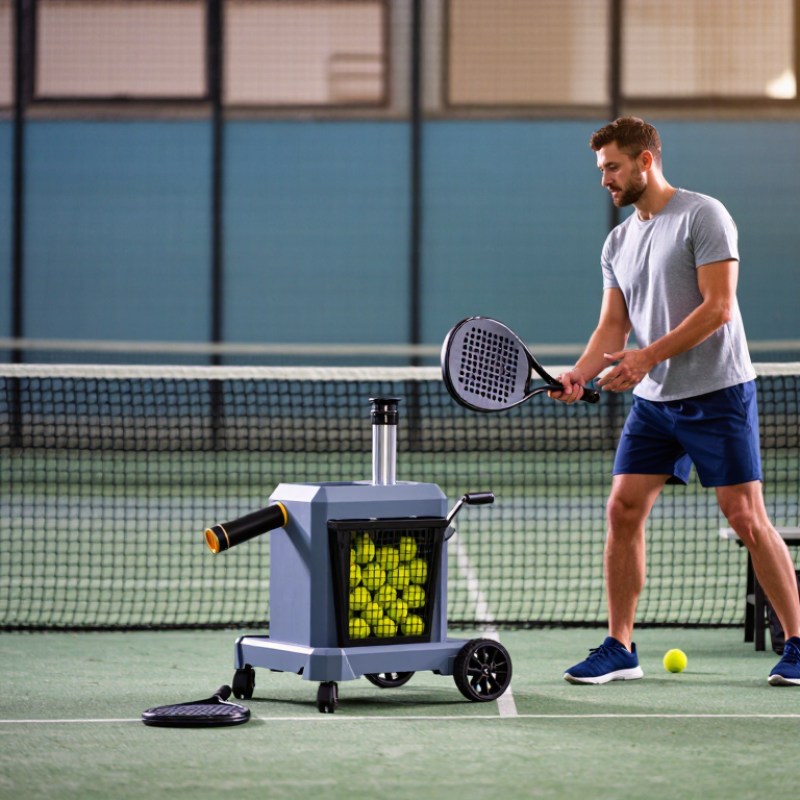
2026 Best Pickleball Training Machine for Global Buyers

What Is a Pickleball Training Machine?

A pickleball training machine stores balls and feeds them onto the court at intervals, so players can practise without a partner. Depending on its design, it may send balls toward different areas or vary feed speed and timing. The player returns each ball, resets position, and repeats the drill. That matters.

It is useful for practising footwork, volleys, dinks, and reaction timing. For example, a player might place the machine near the baseline and work on returning deep shots, then adjust the target area. A steady feed helps reveal patterns in your swing. It does not judge your technique, though, and repeated mistakes can become habits. That part is easy to overlook.

For global buyers, check the machine’s power requirements, charging method, ball compatibility, and instructions before purchasing. Portability also matters if practice involves moving equipment across a court or storing it at home. Noise, setup time, and access to replacement parts are practical details, not glamorous ones. A machine can support focused practice, but it cannot replace match play or informed coaching. The best choice depends on the drills you actually do, and that may take a few sessions to figure out.

How Do Pickleball Training Machines Work?

A pickleball training machine turns a supply of balls into repeatable practice feeds. The player loads the hopper, selects a feed rate, and sets the direction or launch angle. Inside, a feeder releases one ball at a time toward spinning wheels or a pitching mechanism. These moving parts provide forward speed; wheel speed and angle influence height, pace, and sometimes spin. Controls vary by design. Some machines offer preset drills, while others let players adjust the pause between shots.

On court, place the machine behind the baseline and aim it toward a clear target area. Start with a slower feed. Watch where the balls land, then adjust the angle or position before increasing speed. A few trial shots help reveal whether feeds are too deep, too low, or difficult to return. The first setting is rarely perfect. That is normal.

Consistent feeds help players repeat footwork and practice forehand, backhand, and transition shots without relying on a partner. Still, a machine cannot read a player's balance or change direction in response to a weak return. Use it for repetition, not as a full substitute for live play. Check that balls move freely through the feeder, and leave enough space around the machine for safe movement. Small adjustments matter.

Which Types of Training Machines Are Available in 2026?

In 2026, pickleball training machines generally include ball launchers, rebounders, and programmable feeding systems. Launchers send balls at adjustable speeds, heights, and intervals. They help players repeat forehands, backhands, volleys, and footwork patterns without a partner. Some rotate between directions, though their timing may not perfectly match a human opponent. Rebounders use elastic nets or angled panels to return balls. They need no power and suit small yards or indoor spaces, but their bounce can feel less realistic.

Programmable feeders offer more control over drill sequences. Depending on the model, players may set shot placement, pace, or pauses between feeds. A few systems include basic session tracking, but those features are not essential for sound practice. For global buyers, confirm local voltage, plug type, replacement-part access, shipping dimensions, and compatible ball sizes before ordering. A machine that is difficult to service can become an expensive training prop.

Tips: Begin with moderate speed and consistent placement. Place the machine several feet behind the kitchen line, then adjust after testing its bounce. Wear eye protection, keep the feed area clear, and use court-safe settings indoors. Short sessions help maintain technique. Fancy programming is tempting, but steady contact often matters more.

2026 Best Pickleball Training Machine for Global Buyers — Which Types of Training Machines Are Available in 2026?

Machine Type Typical Training Functions Best For Power and Portability Main Buying Consideration
Fixed-direction ball launcher Feeds balls repeatedly along a set direction. Feed interval, ball speed, and launch angle depend on the model. Beginners, warm-ups, and practicing consistent forehand or backhand strokes. Available in battery-powered and mains-powered versions; portability varies with weight and handle or wheel design. Check whether the feed rate and launch angle can be adjusted enough for the intended drills.
Oscillating ball launcher Moves the feed direction across a horizontal range, helping players practice moving between shots. Footwork, court coverage, and alternating forehand and backhand practice. Often portable, but movement mechanisms and battery capacity can add weight or reduce runtime. Confirm whether oscillation is random or follows a fixed pattern, and check the width of the sweep.
Programmable or drill-sequence launcher Some models let users set sequences or vary settings such as speed, direction, and interval; available controls differ by model. Structured solo drills and players who want repeatable practice routines. May use onboard controls, a remote, or a connected device; power options vary. Review which settings can actually be programmed and whether saved drills require a separate controller or app.
Spin-capable launcher Uses wheel or feed adjustments to produce topspin, backspin, or flatter shots, depending on the machine. Practicing returns, blocks, and responses to different ball trajectories. Typically available in portable and larger setups; battery operation and runtime are model-specific. Ask how spin is adjusted and whether the manufacturer specifies compatible pickleball types.
App- or remote-controlled launcher Allows selected functions to be adjusted remotely; supported controls may include feed rate, direction, or drill selection. Players who want to change drills without walking back to the machine. Usually designed for court-side use; connectivity, remote range, and charging requirements vary. Check device compatibility, connection requirements, and whether basic operation is possible without an app.
Club or facility-grade launcher Built for frequent use and may offer a larger ball hopper, more drill options, or a sturdier frame. Coaches, clubs, and facilities running repeated sessions. Often less convenient to transport than compact models; some units require mains power. Compare warranty terms, service access, replacement parts, and the machine’s actual duty-cycle guidance.

Buyer note: These categories can overlap—for example, one launcher may offer both oscillation and programmable drills. Hopper capacity, speed, feed interval, battery runtime, and supported ball types differ by model; verify current specifications and voltage compatibility before purchasing internationally.

What Features Matter Most to Global Buyers?

2026 Best Pickleball Training Machine for Global Buyers
What Features Matter Most to Global Buyers?

For buyers comparing pickleball training machines, consistent feeds matter more than flashy specifications. The Sports & Fitness Industry Association’s 2025 Topline Participation Report estimates 19.8 million Americans played pickleball in 2024, a 45.8% increase from 2023. That growth signals demand, but it does not prove one machine suits every market. Look for adjustable feed intervals, practical speed settings, and controls that are easy to understand. A machine should send balls reliably across a marked court, not just list an impressive maximum speed. Test its feeds with different ball types when possible.

Portability and serviceability are equally important for clubs, coaches, and distributors. Check the machine’s loaded weight, wheel design, battery runtime, and charging requirements before ordering internationally. Confirm that spare parts and clear troubleshooting instructions are available in your region. Safety features, such as a stable base and a visible feed warning, can make busy practice sessions easier to manage. One detail is often overlooked: a large ball hopper saves refills, but may make transport awkward. Real use can be less tidy than a product sheet suggests.

Tips: Ask for a live demonstration, verify voltage compatibility, and request realistic battery-runtime details. Try a short drill before making a bulk purchase. Small tests help. Reliable local support may matter more than extra settings.

These official court dimensions provide a practical reference when evaluating a training machine’s shot placement and drill coverage. Measurements are from USA Pickleball’s court specifications; they are standards, not buyer survey results.

How Can Buyers Compare Models, Costs, and Support?

Compare training machines by the drills they can reproduce, not by feature counts alone. Check ball capacity, feed rate, spin control, trajectory range, and whether oscillation covers both sidelines. A narrow indoor court may expose uneven placement quickly. Ask for a live demonstration or an unedited test video. A specification sheet can still mislead.

The SFIA 2024 Topline Participation Report counted 13.6 million U.S. pickleball participants in 2023, up 51.8% year over year.

That signals rising interest, but it does not prove demand in every market. Buyers should calculate delivered cost, including freight, duties, replacement parts, and batteries. Small details count. Confirm warranty coverage, repair turnaround, and access to local technical support before ordering. Ask how the machine handles different ball types and voltage requirements. If support relies only on email across distant time zones, downtime may stretch longer than expected. I would also compare feed consistency after repeated sessions; few listings explain how performance changes as the hopper empties.

Scroll To Top